Exploring the island of St Helena – Day 2

The hire car the hotel found for me is noteworthy in it’s own right, especially the fact that there are two of them on the island with consecutive number plates. Didn’t meet the owner, don’t know if they are owned by the same person. The car, some may describe it as the ultimate hairdressers car, was a Ford StreetKa. A convertible designed and built by Pininfarina in Italy – the credentials were emblazoned somewhere. Given it was registered in 2007 and they were only made until 2005, maybe it was a good deal. Reasonably nimble with a 1.6 l engine, but the turning circle seemed excessive, particularly due to the large number of hairpin bends on the the island’s roads. The GBP2,000 insurance excess certainly focussed the mind on the super narrow and twisty roads, but not much traffic thankfully.
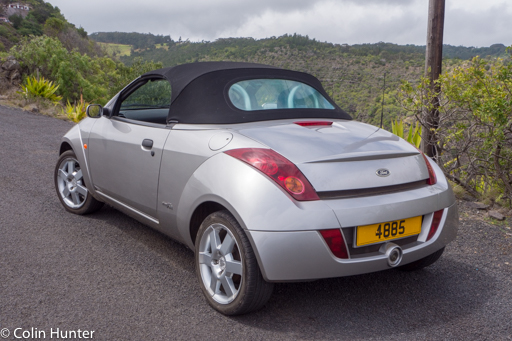
Wouldn’t have been my first choice, if I had a choice, but it did what was asked of it.

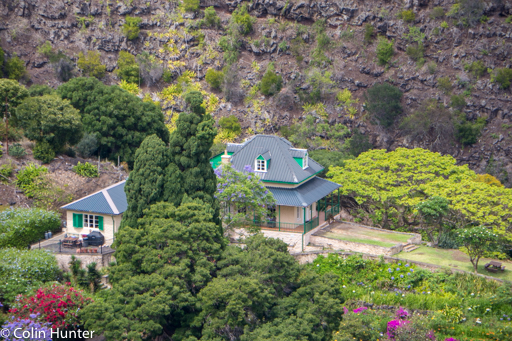
First stop was just out of Jamestown, looking down on Briars Pavilion which was Napoleon’s first home for a few weeks when he was exiled to St Helena in 1815 after his defeat at Waterloo. He later moved to Longwood House for the remaining 6 years of his life. Living in the interior he found most things about the place disagreeable as it was cold and wet with seemingly constant rain. One thing he did like was the island’s coffee, commenting it was the best he’d ever tasted. It was from Green Tipped Bourbon Arabica coffee seeds imported from Mocha in Yemen nearly one hundred years prior. With his endorsement it became sought after in Paris at the time and if you are so inclined, you can source it today for GBP60/100g in Harrods. I did visit Longwood, but it was, if not raining, certainly a heavy drizzle and the house, as with all tourist attractions as I discovered, closed at lunchtime on a Saturday and all of Sunday – should have dome a bit more homework.

Briars Pavilion, which must have existed for a little time at least before Napoleon’s arrival in 1815

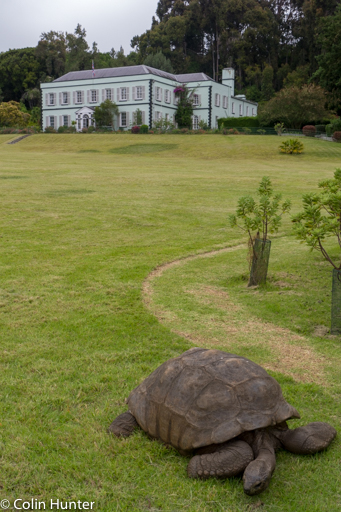
From Briars I drove the short distance as the crow flies, but a convoluted route over the steep country to one of the relatively few flattish places, Plantation House, the Governor’s official residence. The grounds are home to a number of giant Seychelles tortoises, including Jonathan, hatched in 1832 and brought to the island in 1882 with a few others.

The Governor’s modest residence with Jonathan in the foreground.

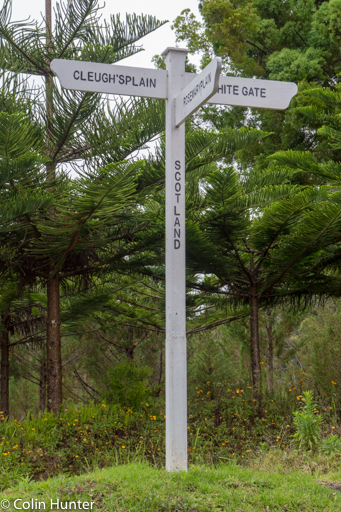
From Plantation House I had to go and visit ‘Scotland’, a small area of the island which, one assumes, has a Scottish link in it’s history.

Signpost at a junction in ‘Scotland’.

Having realised that many things close on Saturday afternoon, I headed back to Jamestown mid-afternoon. I had put GBP20 of petrol in the Ka earlier in the day and it was back down to the 1/2 full level it was supplied with. The petrol station was indeed closed, but opened for an hour later. By the time I’d had a lovely St Helena Coffee and a late bite for lunch, it wasn’t worth driving any further as I’d have to retrace many roads already covered to get to anywhere new. Still plenty to see in Jamestown on foot.

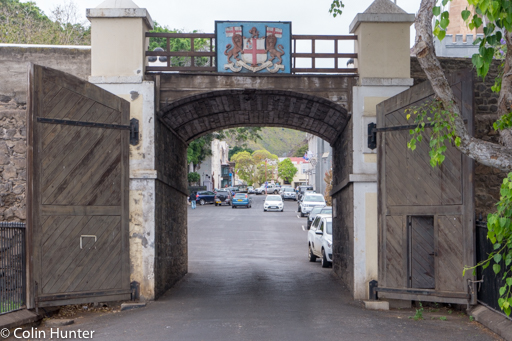
The entry from James Bay shorefront into Jamestown was fortified with a substantial wall and moat. The modern gate is rather symbolic, it would have been much more substantial one or two hundred years ago, probably with a drawbridge over the moat.

Looking into Main Street Jamestown through the main gate.

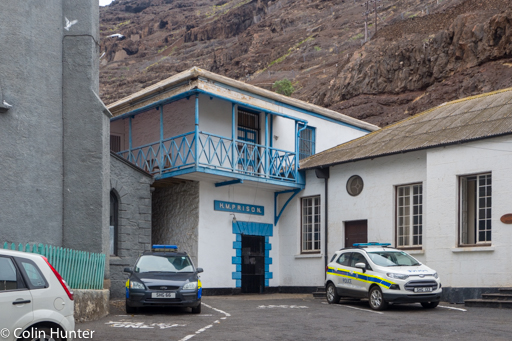
HM Prison just on the right through the gate and adjacent to the Police Station.

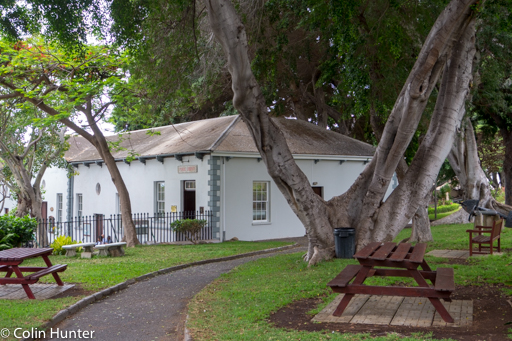
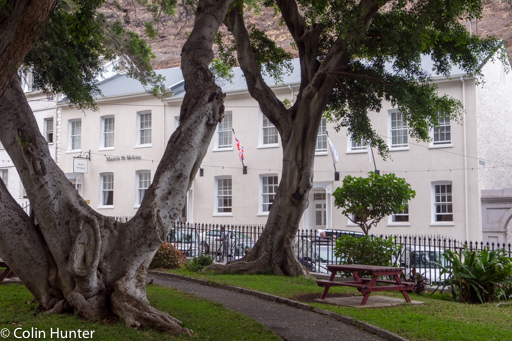
The public library viewed from the Castle Gardens

The Mantis St Helena is the modern hotel in town with rooms in the heritage East India Company buildings on the street and with a contemporary extension at the rear

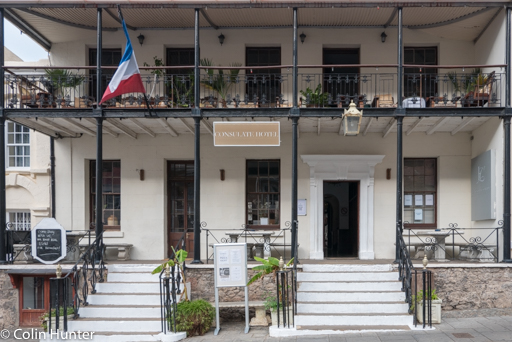
The grand old dame in Jamestown is the Consulate Hotel. There are many luxurious plantation house options out of town and many more self catering options

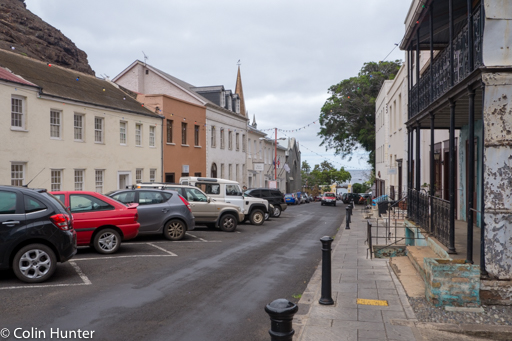
Looking down Main Street from the Consulate Hotel
Exploring the island of St Helena – Day 1

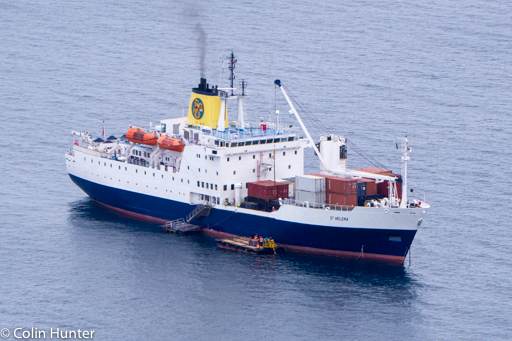
After a restful night in a nice big bed which wasn’t moving, it was time to explore Jamestown further. It was a little drizzly at times, so I spent some time sitting in sheltered spots watching the world go by. I asked the hotel to see if they could find a hire car for Friday and Saturday. They did and it was dropped off at 1000 on Friday morning. I immediately headed off up to Ladder Hill fort to watch the RMS depart for Ascension Island at 1100.

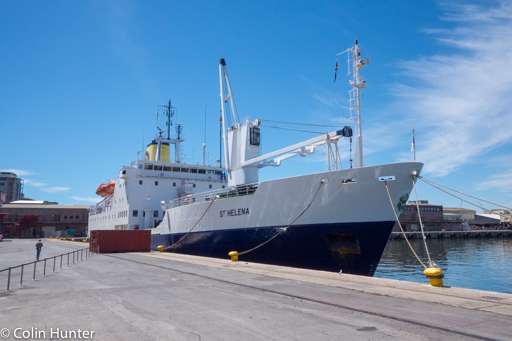
The RMS St Helena loading the last few containers before setting sail for Ascension Island
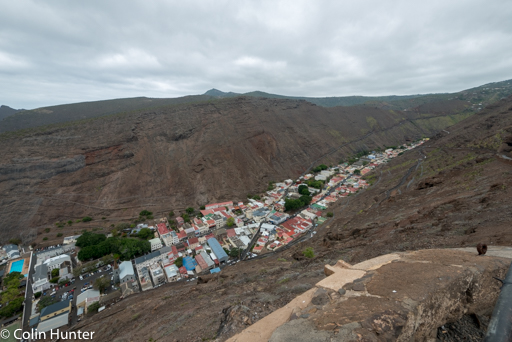
Jamestown squeezed into the narrow gut leading up from James Bay
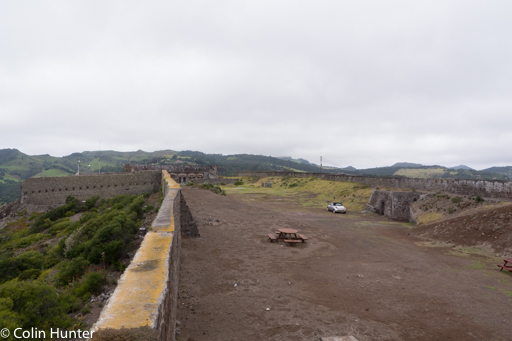
Next I headed up to High Knoll Fort. This was built in several stages, ultimately fortifying the whole hilltop and big enough to fit all of the islands residents into to defend themselves against a foreign invasion trying to take the island – which never happened. At the beginning of the 20th century, several thousand Boer POWs were interned in camps on the island during the Boer War. The officers and troublemakers were held in the fort whilst the rest were held in less secure, makeshift camps elsewhere on the island.
High Knoll Fort had fallen into disrepair and become dangerous, but conservation work is underway to stabilise the stonework
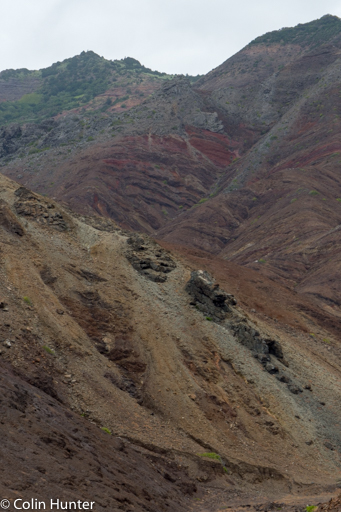
From the fort I headed south to Sandy Bay, the only really swimmable beach on the island with its black volcanic sand. The surrounding area is a barren moonscape until you get higher up inland where there is sufficient relief rainfall to support any significant vegetation.
The moonscape around Sandy Bay
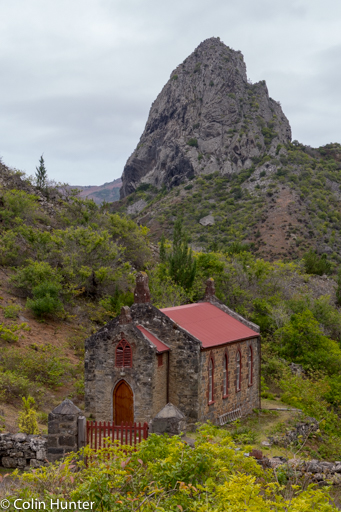
A chapel by the road to Sandy Bay with the pinnacle named ‘Lot’, another called ‘Lot’s Wife’ isn’t visible in this view
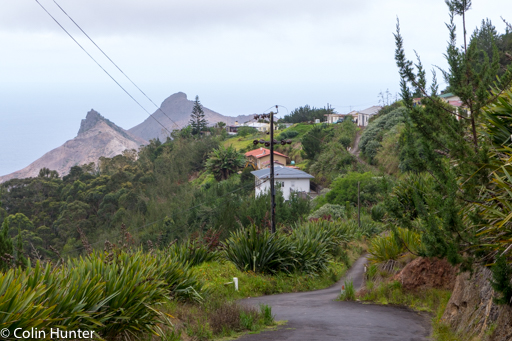
Lush vegetation in the moist interior with narrow roads threading through the vertiginous terrain
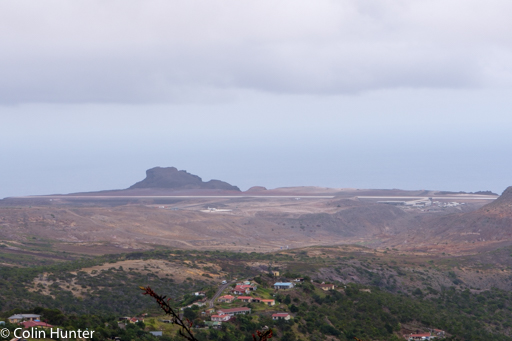
Looking from the interior to the drier eastern coastal region of Prosperous Plain and the new airport
The airport is at around 1000ft above sea level with cliffs at either end of the runway. The rocky outcrops at the northern end (left in the picture) can cause dangerous wind-shear. For now they are using a smaller aircraft than originally planned which can operate in a wider range of conditions. So far there have been less than 20 flights since the official start in October 2017, so still a lot to learn.

Approaching St Helena

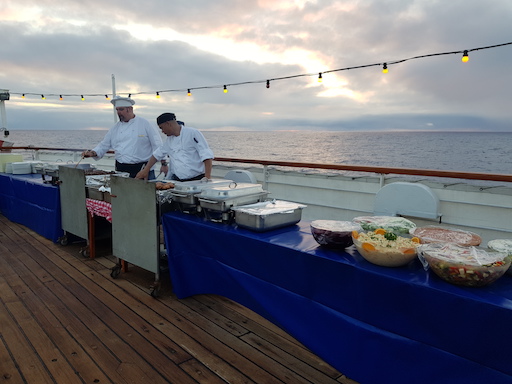
The RMS was due to arrive in James Bay, St Helena on the morning of Wednesday 10th. It is has become tradition to have a BBQ on the sun deck on the final night before arrival. The weather threatened to spoil the party with ominous shower clouds, but ultimately it was fine.


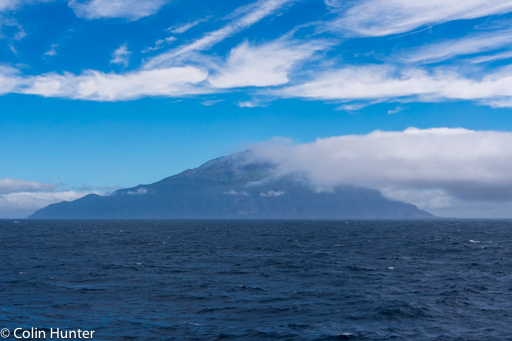
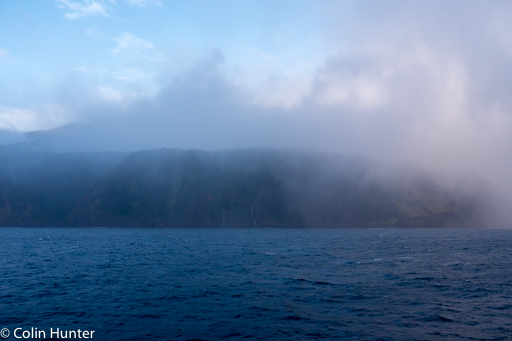
At about 0800 on the morning of the 10th the island of St Helena became visible. A recurring theme is that it was a ‘shadowy figure shrouded in cloud and rain’. 


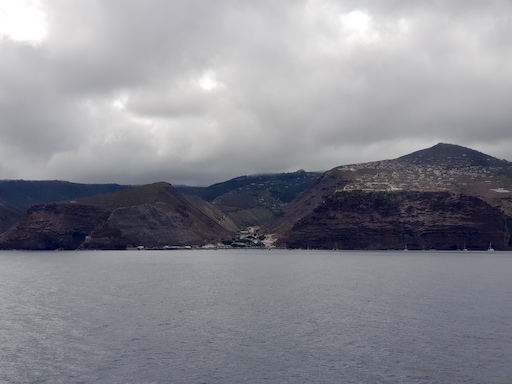
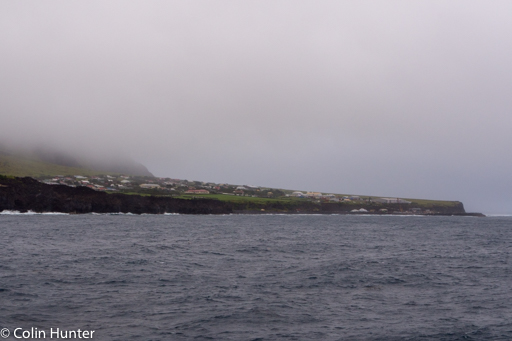
Approaching James Bay, St Helena, with Jamestown visible. The anchor was dropped and the ships horn sounded at 1000 as planned to signal the RMS was secure at anchor. I was ashore and cleared immigration by about 1100. My hotel was a 5 minute walk from the Customs House. Life on the ship had been great, but it was even better to be on terra firma again. Lazy afternoon planned and then a few days to explore the fascinating St Helena before flying out from the new airport on Sunday the 4th.


Edinburgh of the Seven Seas


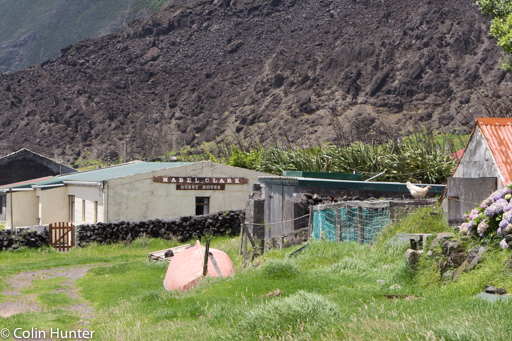
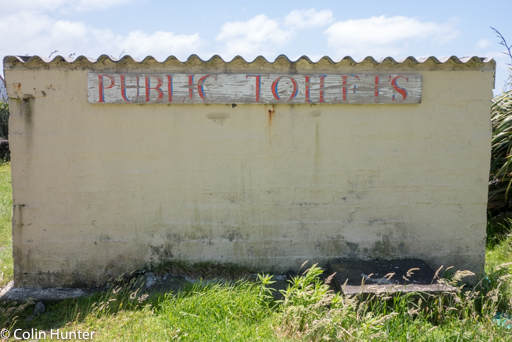
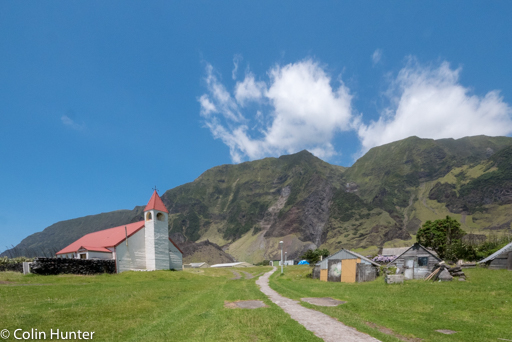
Some of the sights of Edinburgh of the Seven Seas

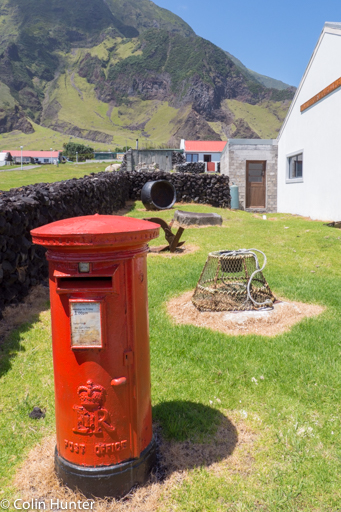
The postbox and miscellanea outside the Post Office

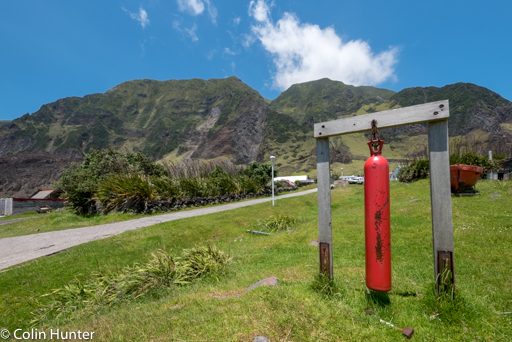
The fishing bell is sounded before first light on fishing days when all of the fishermen will go to sea. There are about 70 or 80 fishing days per year and they produce about 200 tons of lobster. The lobster is of exceptional quality and particularly valuable in Japan.
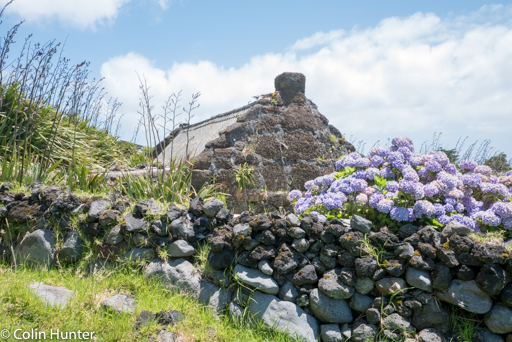
The traditional houses have very heavily built stone gable ends to withstand the ferocious winter weather.
The view looking SE with the catholic church on the left.

Landing on Tristan da Cunha


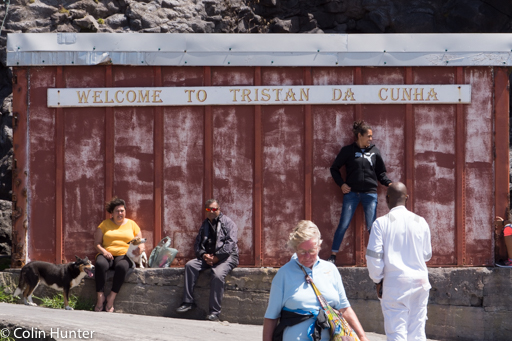
On the morning of Sat 6th January the RMS weighed anchor off Inaccessible Island and steamed north to Tristan da Cunha, anchoring close in to Calshot Harbour. This was our last opportunity to get ashore, so we were all anxious. The first RIB came out to the ship and assessed the conditions as workable and the captain announced that disembarkation would proceed. The immigration official came aboard and we paid our landing fees, had our passports stamped and were issued our disembarkation cards. Then began the waiting game. Passengers donned a lifejacket and harness and one by one climbed down the pilot’s rope ladder to waiting RIBs to be ferried ashore. Due to the wind and waves and rolling of the ship this was a slow process. I had disembarkation card 62, so it seemed like an eternity before my group was called and then in no time we were ashore.


Container at the start of the harbour road.
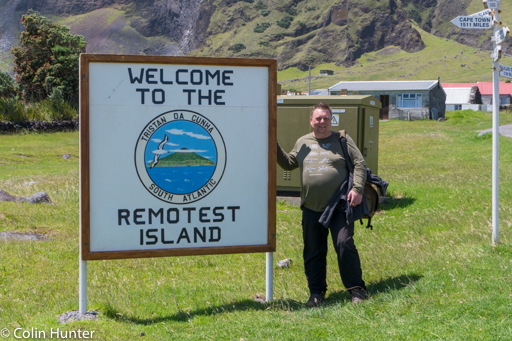
‘That’ sign.
It was already 1200 by the time I made the short walk up to the famous sign and distance post across the road from the Post Office and boarding was likely to start at 1400 with the sounding of the ship’s horn, so I only had a couple of hours to look around. I picked up a few souvenirs and had a coffee and obligatory lobster tart while I wrote a few postcards.
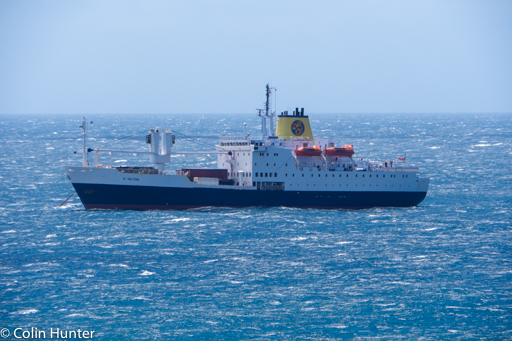
I walked past the supermarket and administrators house, photographing the RMS at anchor on the way.
I stopped for a quick beer at the Albatross Bar with other ships passengers and a few locals. The foundation stone of the hall was laid by HRH Duke of Edinburgh in January 1957. I bumped into one of my fellow passengers shortly before 1400 and we went for a coffee and lobster sandwich. As expected, the ship’s horn sounded at about 1400 and we meandered our way back down to the harbour. I had plenty time to explore around the harbour before getting onto a RIB back to the RMS. Getting into a harness whilst the RIB was bouncing around wasn’t easy. My turn, wait until the RIB rises on a wave, step onto the rope ladder and about ten steps up to the portal on ‘B’ deck. Boarding took considerably longer than planned, so the RMS didn’t weigh anchor until around 1800 before heading a little west, turning and doing a fly-by salute to Edinburgh of the Seven Seas as this was her last visit to Tristan da Cunha. She then set course NNE for St Helena.

Inaccessible and Nightingale Islands

We had steamed offshore for the night and on the morning of Jan 5th we approached Nightingale Island and proceeded to circumnavigate the island. The island in uninhabited, but has a hut Tristanians use for fishing trips. The island is home to huge colonies of seabirds, northern rockhopper penguins and fur seals.


Nightingale Island with Middle and Stoltenhoff Islands in the background.

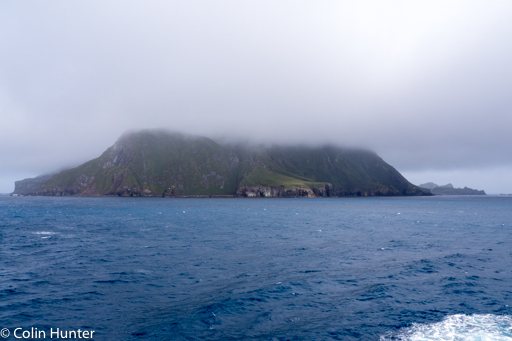
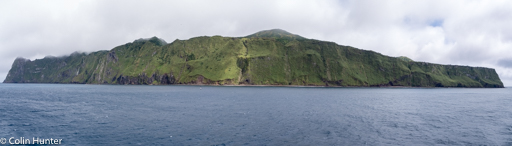
After Nightingale Island the RMS proceeded to Inaccessible Island with it’s sheer cliffs all around.

Inaccessible Island looking, well, inaccessible.

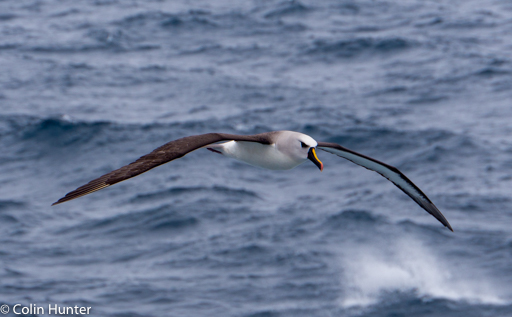
Atlantic yellow-nosed albatross

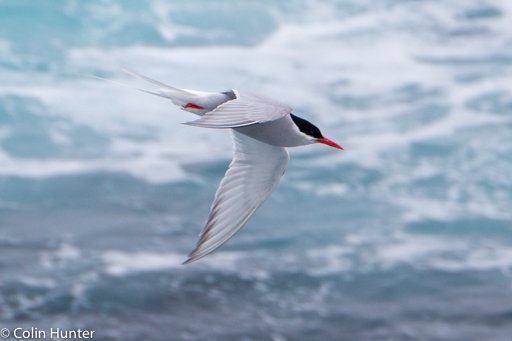
Antarctic tern

After visiting it’s nearest neighbours, we returned to Tristan da Cunha in the afternoon to see if conditions were suitable for anchoring overnight.

Approaching Tristan da Cunha from the south.

With the conditions not suitable for anchoring we returned to Inaccessible island and anchored in Carlisle Bay for the night.


Not landing at Edinburgh of the Seven Seas


Just after first light on Thursday January 4th, we approached a moody Tristan da Cunha shrouded in mist and rain and in marginal conditions. The scheduled dropping anchor at 0700 was delayed until 0900 and the weather did improve a little in that time. The RMS anchored to the east of the settlement and the lava flow that threatened to wipe it out in 1961.


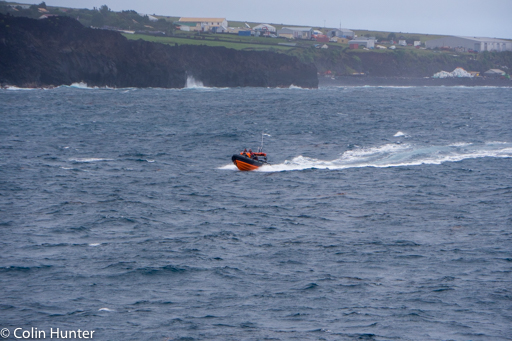
A RIB (Rigid-hulled Inflatable Boat) came out from Calshot Harbour with an immigration representative to stamp passports before passengers proceeded ashore.


However, it was not to be. Given it would take two to three hours to ferry a hundred odd passengers ashore and then the same back, the currently less than ideal conditions and a worsening forecast, the captain decided that only essential transfers would be made. The initial disappointment of not being able to land turned to increasing frustration as the weather steadily improved all day and it was dawning on passengers that having come all this way, there may not be another attempt to land and that an opportunity to get ashore for even a short time had been missed. In the late afternoon after the essential transfers were complete, the captain offered his humble apologies for not getting us ashore and said that whilst the weather was not great on the Friday, there was a better window on Saturday 6th. Whilst this would not allow people the originally planned overnight stay with the locals, it would hopefully allow everyone ashore for a few hours. Leaving for St Helena on Saturday evening should still see us arrive on Wednesday 10th as planned. 

Gough Island

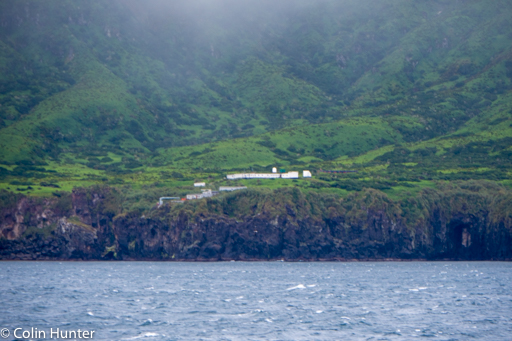
A day and a half short of the Tristan da Cunha group of islands, we were informed that as a surprise they had been considering passing Gough Island some 400km south of Tristan da Cunha itself as this is the last scheduled voyage of the RMS St Helena taking in Tristan da Cunha. Given the weather was looking unsatisfactory at Tristan da Cunha for our scheduled arrival on the 3rd, this was now the plan, with us now due to arrive there on the morning of the 4th. We arrived at Gough Island shortly after first light at 0600 on the 3rd. Initially the island was a shadowy figure shrouded in mist and rain. We had seen many more birds around the ship the previous evening and now there were birds everywhere as well as fur seals fleetingly visible amongst the waves.

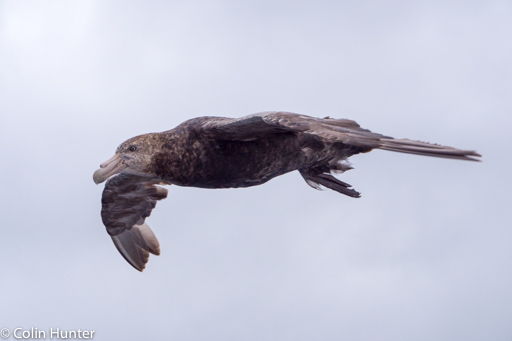
A giant petrel drifts slowly past the ship riding the up draught


We circled a couple of times and sounded the ships horn off the South African meteorological station on Gough Island before continuing around the island and north towards Tristan da Cunha to arrive at first light on the 4th.

Aboard RMS St Helena

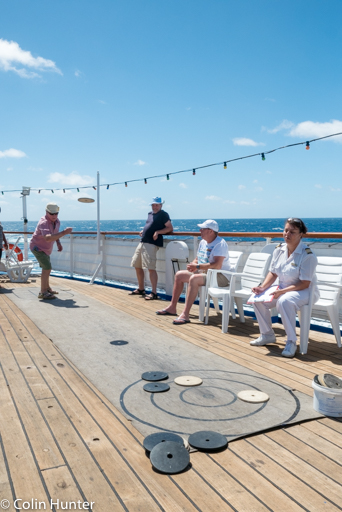
The first full day aboard dragged a little as you get used to the rhythm of the ship, numerous activities regularly punctuated with meals. Breakfast in the dining room or the sun lounge, beef tea at 1000, lunch in the dining room or the sun lounge, afternoon tea in the main lounge or sun lounge and the more formal dinner in 2 sittings, 1845 and 2000, in the dining room. With fair weather comes activities on the sun deck to the aft of the ship.


One morning after tea there was a deck quoits tournament which was new to many, but the old hands were clearly a little rusty which levelled the playing field.


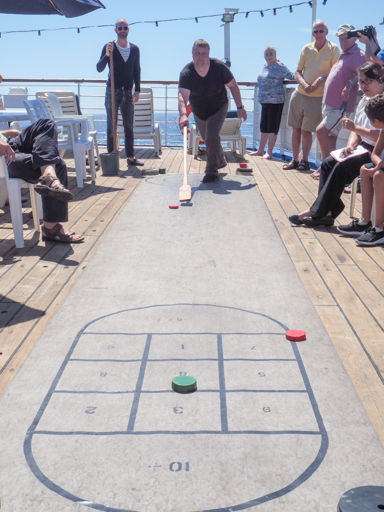
The next deck game was shuffleboard and I contrived to win the tournament with a large dose of beginners luck.

Over four evenings before dinner on the first leg to Tristan da Cunha there was a team quiz tournament. Brian carefully recruited a team, the ‘Unusual Suspects’, from newcomers and old hands and apart from one lacklustre showing we won the first tournament. Our score caries forward to the second leg tournament, so we have a bit of a head start.

There were a number of old documentaries about Tristan da Cunha shown which gave more of an insight to those of us who knew little about the island.


Sailing from Cape Town

On Friday 29th December 2017 and with the ticket and border formalities out of the way, I boarded the RMS St Helena with 113 other passengers and 55 crew on Voyage 267.


This is scheduled to be the second last voyage ever and the last to visit Tristan da Cunha en-route to St Helena. That said, the original end of the RMS St Helena service was about a year ago, but her schedule was extended whilst ongoing issues with the new airport on St Helena were ironed out, so never say never, the trusty old RMS may continue yet.

She is the last true ‘Royal Mail Ship’, with one remaining in name only being the Queen Mary II. Since entering service at the end of the eighties, she has operated pretty much non-stop between Cape Town, St Helena and Ascension Island with occasional trips to Tristan da Cunha and to the UK.


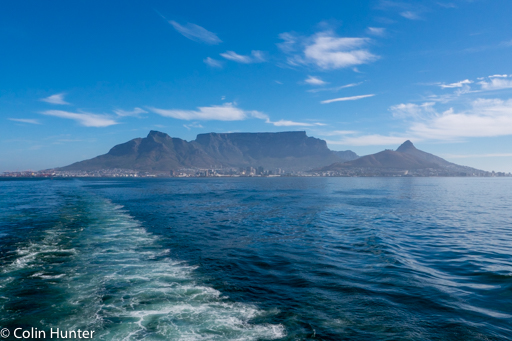
At around 1700 SAST we set sail from Cape Town leaving behind the iconic view of Table Mountain and setting course West by South for Tristan da Cunha, about five days sailing.