With the RS4 being direct petrol injection into the combustion chamber, FSI (Fuel Stratified Injection) in Audi-land, the oil laden vapours from the crankcase recycled for emission reduction hit the hot inlet tract and valve and deposit a gooey buildup on the inlet tract and valve stem and eventually become hard carbon deposits because there is no petrol washing over the valve as there would be with a carburettor, or manifold fuel injection, which along with the additives in the petrol kept all of this clean. So, with the RS4 having passed the 100K km mark, it was time for a ‘carbon clean’. I had noticed uneven idling and the engine hunting at low speeds around town making it a little hard to drive smoothly – definite signs a clean is needed.
So, what’s involved? There are some snake-oil solutions out there, so tread with caution. If done regularly, the gooey deposits can be dissolved with foaming aerosol can cleaners injected into the inlet manifold, allowed to dissolve for half an hour or so and then consumed and expelled through combustion. I will do this annually now as I now know where there is a suitable injection point on the inlet manifold. However, this does not remove any hard carbon deposits. The only 100% solution is to remove the cylinder heads, but since this requires engine removal for the RS4, I didn’t want to go there. The intermediate solution is to remove the inlet manifold to get access to the inlet tracts and valves. This is nice and easy for your average wee car, but having a V8 shoehorned into a medium sized saloon car adds difficulty. I had to buy some specific tools to access fasteners at the back of the engine and fabricate a couple of special tools. After that, just some tight and fiddly dismantling.
For the cleaning, some go with foaming cleaner and lots of elbow-grease with scrapers and the like. Some use the foaming cleaner to remove the gooey stuff and then grit blasting to remove any hard deposits. I chose the latter option and went with ground walnut shell media as it is more environmentally friendly.
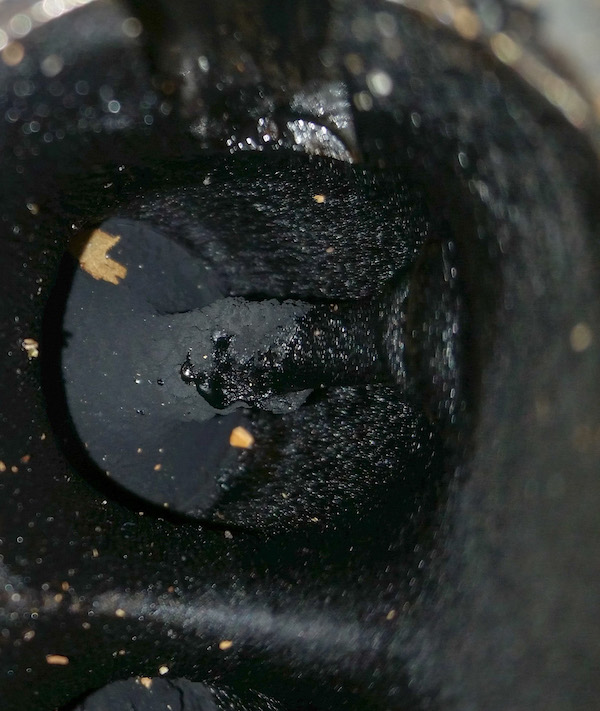
Inlet tract and valve stem with significant deposits – some bits of walnut shell visible.
I would visually ensure both valves were closed on as many inlets as possible and then squirt the foam cleaner in and leave for about half an hour. The foam has reduced to a liquid and using an old toothbrush the last of the gooey stuff could be brushed off and then soaked up and removed with paper towels. The next step was to use the crushed walnut shell media to remove the hard carbon. This became a lengthy drama, as the media was too large to fit through the grit-blasting gun and would clog up in seconds. After incremental modifications to the grit blasting gun over a couple of weekends, it would work most of the time, with only occasional blockages. Next time – buy finer walnut shell grit.
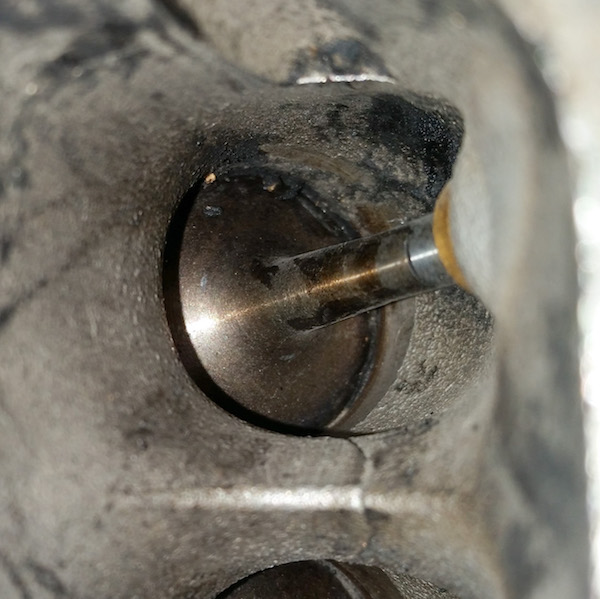
Inlet and valve after cleaning.
Well, all I can say is wow, what a difference. From being a pain at town speeds, it’s now super smooth.