After a restful night in a nice big bed which wasn’t moving, it was time to explore Jamestown further. It was a little drizzly at times, so I spent some time sitting in sheltered spots watching the world go by. I asked the hotel to see if they could find a hire car for Friday and Saturday. They did and it was dropped off at 1000 on Friday morning. I immediately headed off up to Ladder Hill fort to watch the RMS depart for Ascension Island at 1100.
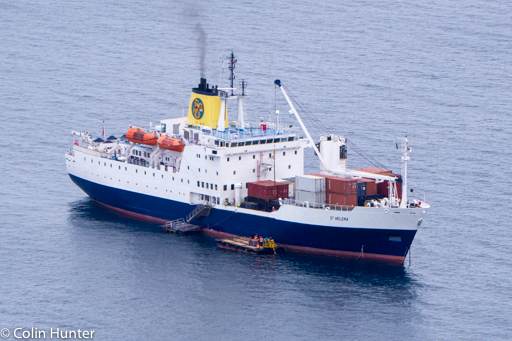
The RMS St Helena loading the last few containers before setting sail for Ascension Island
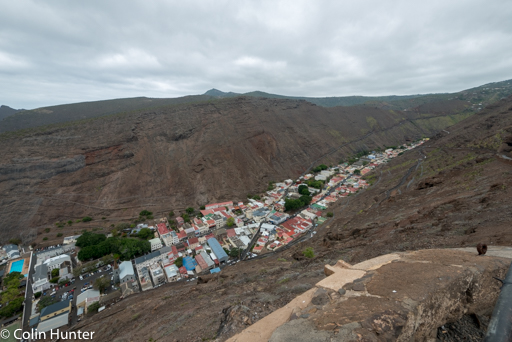
Jamestown squeezed into the narrow gut leading up from James Bay
Next I headed up to High Knoll Fort. This was built in several stages, ultimately fortifying the whole hilltop and big enough to fit all of the islands residents into to defend themselves against a foreign invasion trying to take the island – which never happened. At the beginning of the 20th century, several thousand Boer POWs were interned in camps on the island during the Boer War. The officers and troublemakers were held in the fort whilst the rest were held in less secure, makeshift camps elsewhere on the island.
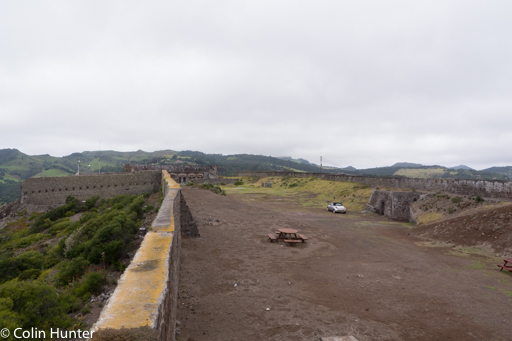
High Knoll Fort had fallen into disrepair and become dangerous, but conservation work is underway to stabilise the stonework
From the fort I headed south to Sandy Bay, the only really swimmable beach on the island with its black volcanic sand. The surrounding area is a barren moonscape until you get higher up inland where there is sufficient relief rainfall to support any significant vegetation.
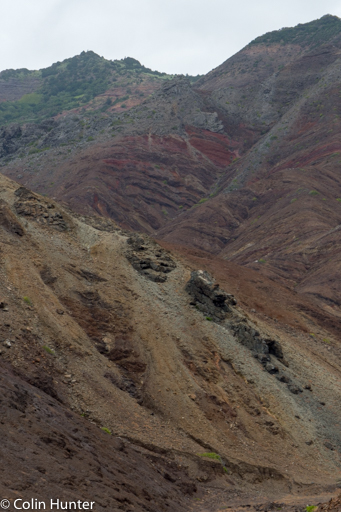
The moonscape around Sandy Bay
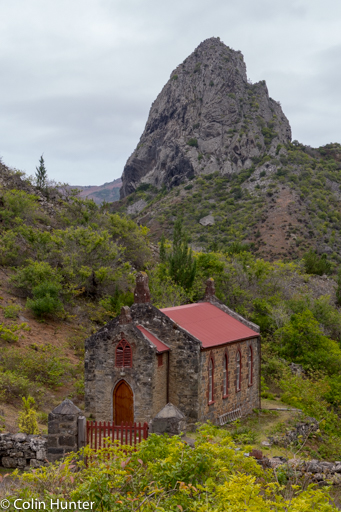
A chapel by the road to Sandy Bay with the pinnacle named ‘Lot’, another called ‘Lot’s Wife’ isn’t visible in this view
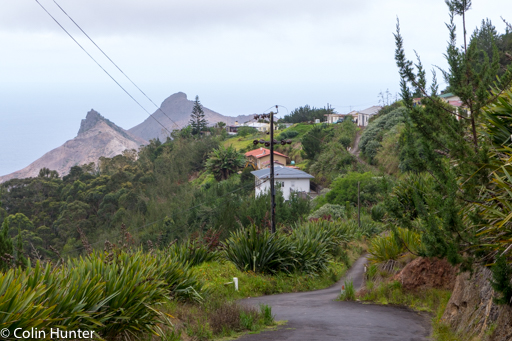
Lush vegetation in the moist interior with narrow roads threading through the vertiginous terrain
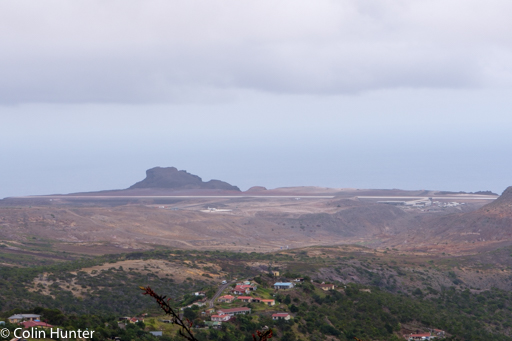
Looking from the interior to the drier eastern coastal region of Prosperous Plain and the new airport
The airport is at around 1000ft above sea level with cliffs at either end of the runway. The rocky outcrops at the northern end (left in the picture) can cause dangerous wind-shear. For now they are using a smaller aircraft than originally planned which can operate in a wider range of conditions. So far there have been less than 20 flights since the official start in October 2017, so still a lot to learn.