Cape Kidnappers, only a few kilometers from Havelock North, is home to the largest mainland breeding colony of Australasian Gannets, sula serrator. The colony is within the Ocean Beach Wildlife Preserve and this organisation are interested in knowing more about the ecology of the gannets. They will buy µGPS GPS trackers, but this is a new product and to give them confidence Sirtrack provided two trial units to prove there effectiveness. I headed out to assist a PhD student, Steffi, from Auckland University who is studying the foraging ecology of this species at the Cape and another colony on an island off Auckland. I was there to share the users experience with the technology and, where necessary assist in the setup, deployment and recovery of the devices. This provides invaluable feedback to improve this and all products and specifically address any deficiencies in the manual for the µGPS. It was convenient for Steffi as she was alone this week and it takes two people to handle the gannets, one person has to hold the head with one hand to control the potentially lethal beak and the wings with the other hand to avoid any damage, especially in the almost constant blustery conditions conditions at the Cape.
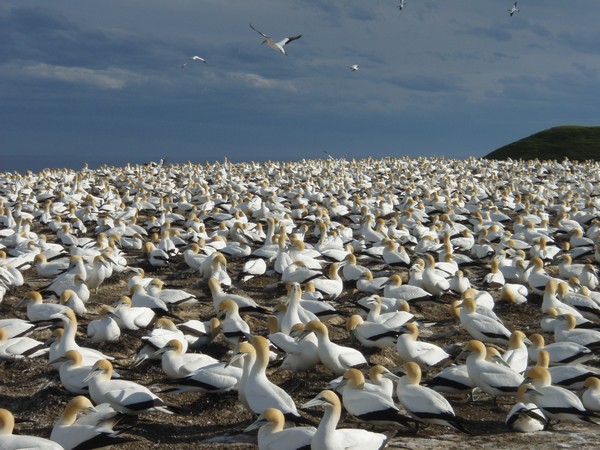
The plateau colony at Cape Kidnappers.
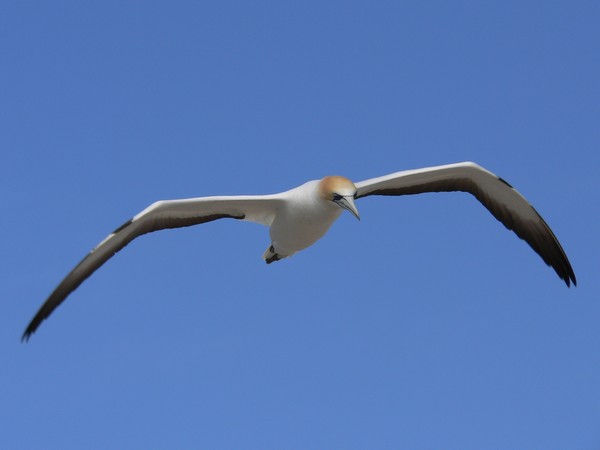
A gannet flying above Cape Kidnappers.
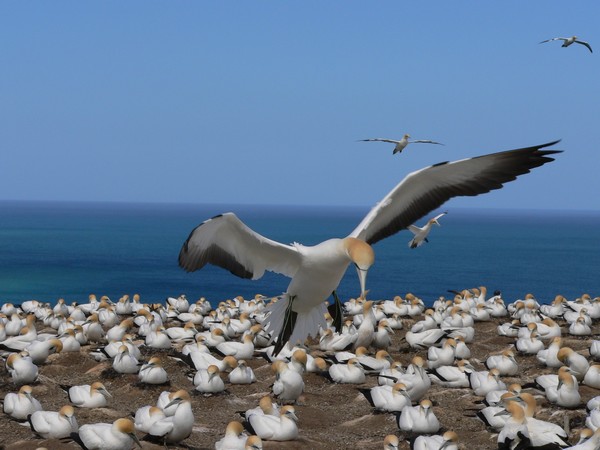
Final approach, committed, could be perfect, or head over heals.
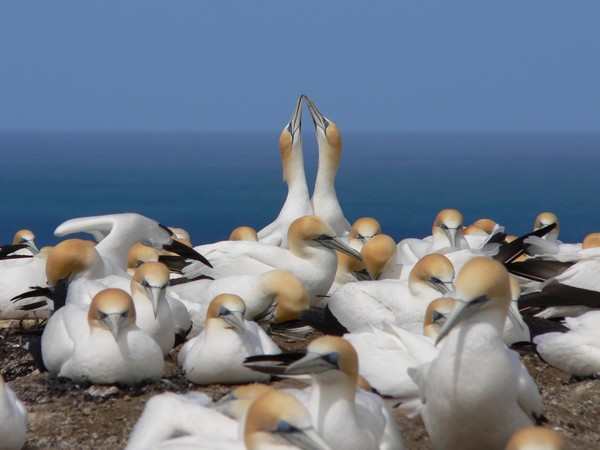
A courting display as one partner returns.
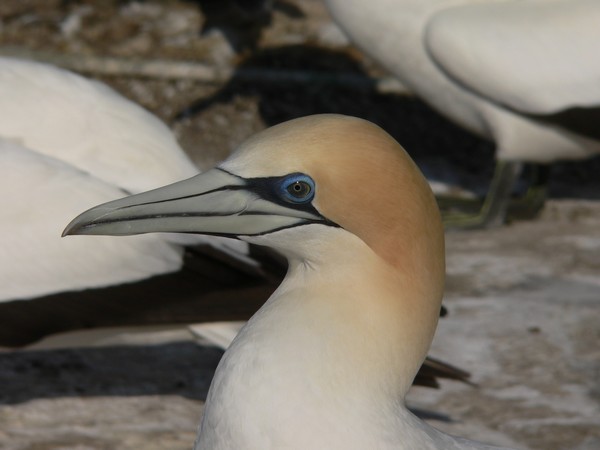
A close-up shows the striking markings and colours of the head and shows one of the large and incredibly effective eyes.
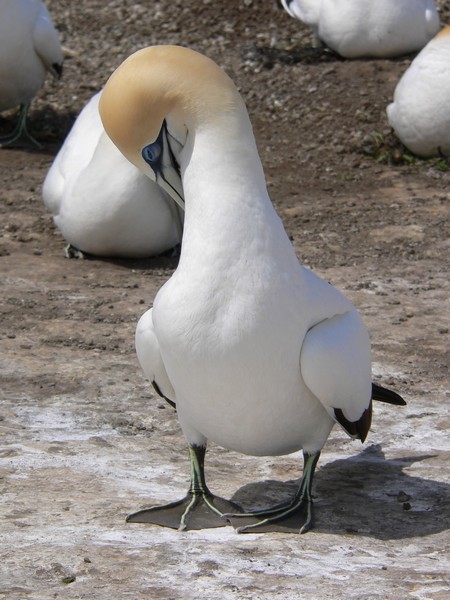
A gannet preening shows some more of the stunning coloration.
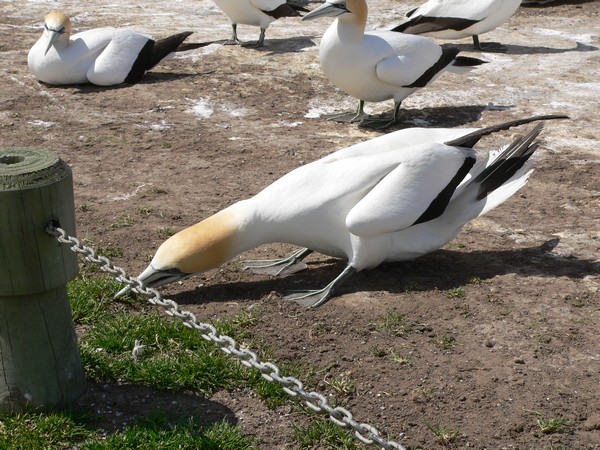
The gannet won and scored some grass to line its nest.
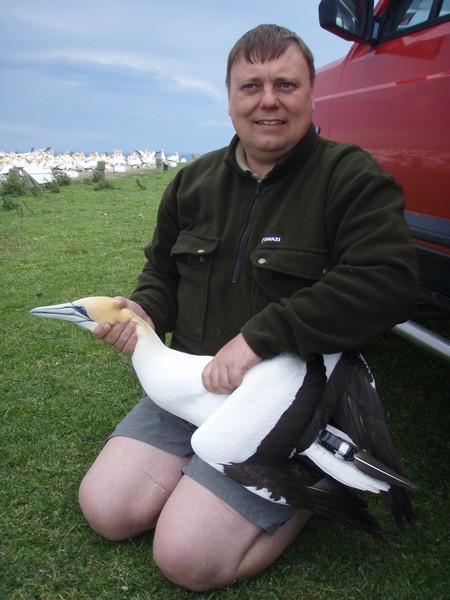
A gannet with a µGPS taped to a couple of its dozen tail feathers. The bird will carry the device for just a day and then give us a new window into where these beautiful birds forage.
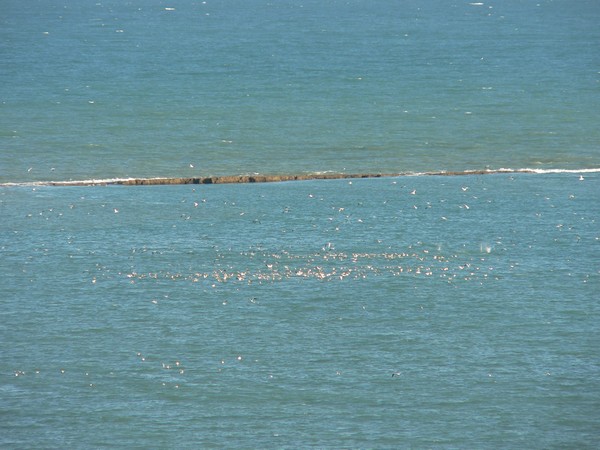
A load of gannets feeding next to the Black Reef.