A Week in Hawaii

My good friends Melinda and her husband of nearly a year now, Kim, live half the time in Hawaii where Kim works at the Hawaii Institute of Marine Biology and the rest of the time in Richmond, a suburb of Seattle, where Melinda works as CEO and Technical Director of Wildlife Computers – competitors to Sirtrack, but friends and colleagues too. We have enjoyed each others company at a number of conferences and workshops around the world over the last few years. I have shown them around my home turf here in Hawkes Bay and what little I know of Auckland. I have enjoyed their hospitality in Seattle and the offer of accommodation and hospitality in Hawaii was too good to ignore.

So, I arranged to stay with them for a week in early February. By the wonders of the dateline, I left Napier at the crack of dawn on Saturday 7th Feb. and arrived in Honolulu mid-evening on Friday 6th. I finally managed to use my second complimentary Airpoints Gold upgrade to business class which made the 10 hour flight very comfortable. Having attempted to use it several times and failed it was great because it was due to expire in a couple of weeks. I picked up a hire car and headed North and West. I overshot a wee bit, but after a phone call I was sipping my first cocktail about 10pm.


Sunset on the lanai, or balcony, overlooking Lahi-Lahi Bay.

After a relaxed morning we drove the 40 minutes down to Honolulu. We picked up some food for lunch in Chinatown and a few beers and headed to the harbour where Kims boat, Imua, is moored. We motored out of the harbour and headed North towards the Reef Runway, used jointly by Honolulu International Airport and Hickham Air Force Base. The US Navy had managed to park a billion dollar guided missile cruiser on the namesake reef at the Northern end of the runway near the entrance to Pearl Harbour. They had just refitted it and taken it for sea trials. They were stooging around in the dark dropping off civilian contractors into shore boats when they ran the USS Port Royal up onto the sand and rock reef.


USS Port Royal high and dry on the reef off Honolulu’s main runway.

When we saw her they had attempted to tow her off twice and failed. They had pumped out her fuel, water and half the crew jumped ship, but this still didn’t help. There were a lot of guard ships and other vessels around. They again failed to tow her off that night, but I wonder if they didn’t even try, but removed a significant quantity of weaponery under cover of dark that night. She was successfully towed the following night after ‘removing the anchor chain and other heavy items’. Most embarassing for the US Navy was that every plane landing at the airport had a clear view of this large ship listing noticably with the thankfully small surf breaking around her.

On Sunday morning we walked out to the North Western tip of Oahu, Kaena Point. The path is the bed of an old narrow gauge railway used to link the North coast and West coast sugar cane plantations, long since unused, but the sleepers are visible in a number of places.


Looking South down the West coast of Oahu. The old railway bed pathway is visible below.

We stopped to watch humpback whales breaching in the distance when I noticed a familiar outline on the rocks below us, a Hawaiian monk seal basking in the sun. At the point there is a nesting area for laysan albatross and wedge-tailed shearwaters. We also saw a white-tailed tropic bird flying around. On the way back we pointed out the monk seal to a couple of young tourists, sharing our observation and knowledge – big mistake! They immediately walked right down to the poor animal and took pictures of each other next to it. I was surprised that it did not head for the sea or lunge at them. I will in future keep it to myself, some people do not deserve to share natures beauty, no respect. That afternoon I drove up to the North coast for a look around.


Pesky tourists showing no respect for a Hawaiian monk seal minding it’s own business and enjoying the sun.

On Monday we started early and dropped my car at Ko Olina marina, pretty much halfway between Honolulu and Waianae. We then picked up Kims work boat from Honolulu with his colleague David to try and catch and tag some striped marlin. We headed out to the nearest FAD (Fish Aggregation Device) and immediately caught two mahi-mahi, or dolphin fish, a good feed as they were not the target species. At the end of the day, having caught nothing, we hooked up a big blue marlin. I was right beside the reel it hit and it was my fish. It took out more than half the line on the reel, well over 1000yds. The drag was way too hot to touch and was cooled with water several times. We hauled it in to only 20 or 30 metres from the boat after it had pretty much given up fighting, but one last leap in the air and it managed to break the line with it’s bill. Bugger! Never mind, I got to experience having a 300lb plus fish on the line and saw it leap a few times.


The last gasp escape of a 300lb plus blue marlin.

On the Tuesday we headed to Kim’s work, the HIMB (Hawaii Institute of Marine Biology) lab on Coconut Island in Kaneohe Bay on the East coast of the island. It was originally a playground island for a wealthy family with many animals including an elephant apparently kept for their amusement. It is now wholly owned by the University of Hawaii.


Coconut Island research centre from mainland Oahu.

Whilst on the island I hung out for a while at Kim’s shark tank. There was a long tank, maybe 6m wide by 30m long, which contained a medium sized shark and a slightly smaller local reef fish which followed it constantly. Not much else to be seen. At the far end of the tank is a small penned off area which was very cool. I watched it for about an hour and took a few pictures.
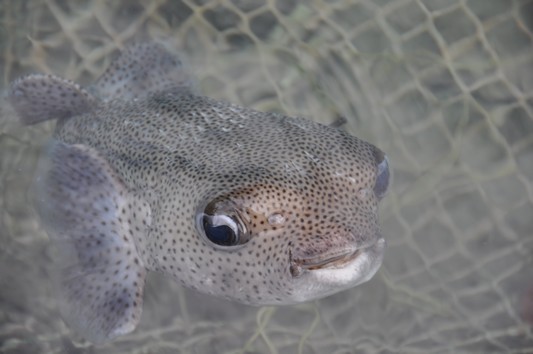

A large puffer fish which came in small and enjoyed a good life until it couldn’t get out through the net any more.


The main reason for the small tank was to grow small fish to move to the main tank. Here’s a small hammerhead and a stingray.

The puffer fish was very cool. It would do a couple of laps and then come and check me out. It would stick its head out of the water and on a few occasions squirted water in my general direction – only 20 to 30cm, but cool to watch.

On Wednesday we took a colleague of Melinda’s and his family out for a trip on Imua. We searched around for dolphins and whales, but didn’t find anything. I gave Kim some stick about not having a line out, so we put a single trolling line out. On our way home passing close to Waikiki Beach, where you never catch fish, we took a strike on the one line out. I jumped down from the flying bridge and got on the reel. After about 20 minutes I had reeled in a good sized mahi-mahi. Kim vowed that he would religiously put out a line no matter how unlikely the result.


Flying the flag on the way home.
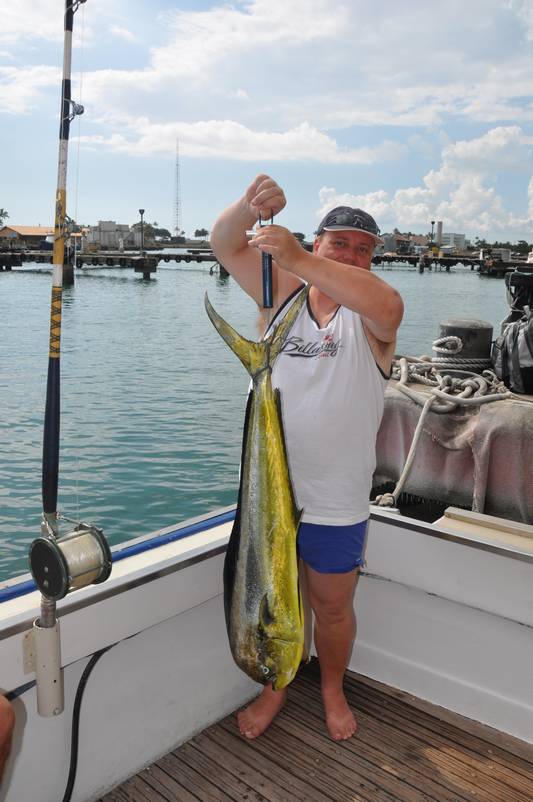

A good sized mahi-mahi, very tasty!

Those were the highlights of my holiday in Hawaii. Great place and I look forward to visiting again soon.

The Big Four-Oh

Yup, it happens to everyone eventually. Natural selection has worked in my favour so far, and I have reached 40 years of age.

On Saturday 20th December 2008 I planned to hold a party with my neighbours’ support and their shed. I wanted to do something a bit special and something I hadn’t tried before, so I decided to spit-roast a whole lamb. I spent most of the Sunday before fabricating and a couple of evenings finishing off the spit. My neighbour, Gordon, or ‘Frog’, is a stainless steel fitter and welder. He has a lot of second-hand stainless kicking around and new stock left over from jobs.

On the day it was very windy and three sheets of mild steel were welded together as a wind-break- very effective. We had pine, macrocarpa and peach wood to burn for embers. The spit design needs some fine tuning, but we got the lamb on their and stuffed with slashed lemons, garlic bulbs, onions and herbs, followed by a good quantity of the olive oil and lemon juice based marinade. The cavity was stitched up and the spit placed on the stand as soon as the flames died down to good hot embers.


Lamb on a shiny stainless steel spit. The shed and guests in the background.

Work colleagues and friends with kids turned up mid-afternoon to enjoy the pleasures of the ‘lifestyle block’. The more hardcore party types pitched up later for the food and drink.


My neighbours house with kids on the lawn. My wee cottage in the background.

Cooking the lamb took considerably longer than I expected. I was determined not to burn the outside and I suspect the wind didn’t help despite the shelter. Anyway, an hour and a half after my upper estimate of 8.00 pm, at 9.30 pm the lamb was ready.


Mark and I take the lamb to the table for carving. You can see the lemons, onions and garlic inside the beast and the stitched cavity.

We let the cooked lamb rest for 10 minutes or so before carving.


Phil was a chef in a previous life. It was a pleasure to watch him work and I carved the pieces as they came off the carcase.

There were a few people hovering and picking, but Moony grabbed the first available leg-bone for a good gnaw.


Moony caught gnawing on a leg-bone at the back of the shed.

I guess there were fifty-or-so people there, so one lamb, two rabbits and some venison, plus some sausages for the kids doesn’t go that far.


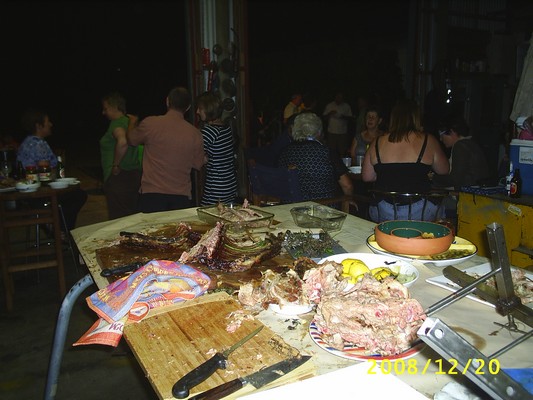
The remains of a whole lamb with happy guests. The dogs, pigs and chickens will be happy for many days to come!


‘Mustang Colin’

After dropping the VFR off at the hotel in Redondo Beach, I jumped on a shuttle bus to LAX. There I met my good friend Ed Bryant and we picked up a very cool ride for our drive up Route 1, the PCH (Pacific Coast Highway) to Monterey for the Biologging III conference. I kept the car for two weeks all up.


Hertz GT-H Shelby Mustang.

When the Mustang was first released in the mid-1960’s, Hertz had Carroll Shelby produce the original GT 350-H Mustang. This was such a good car that people would hire and race them and get good results. Not what Hertz had in mind, but hard for them to find out. It became known as the ‘Rent-a-Racer’. With the good looking 2006 model Ford Mustang, someone at Hertz harked back to the sixties and had Carroll Shelby Motors produce a modern day GT-H. The one I hired was based on the Ford Mustang GT convertible, V8 of course – there is a coupe too. Shelby add their own performance exhaust which sounds awesome and adds 25HP, up to 325HP. They also add the Ford performance suspension and brake package as well as a custom bodywork and paint package. Sadly, they only have auto’s and you cannot override the traction control. The button is still there but is just a dummy with TCS written on it. I intended popping this cover off to see if the wiring was still there to disable TCS, but the car was enough fun to drive with TCS that I didn’t bother.


Hood up on Monterey pier.

From Monterey I traveled 900 miles in a little over a day to get to a ‘luau’ or traditional Hawaiian bar-b-que at my good friends place in Redmond, near Seattle. A few powernaps were needed on the first day after the usual work-hard, play-hard of a conference, but I still managed almost 600miles from 1100 until 2230 on I5 (Interstate 5). The remainder was completed by 2.00pm the next day. The beermeisters at the party were penning names on the beer cups, and mine was christened ‘Mustang Colin’.

The traditional part of the luau is the bar-b-qued pig. This is a particularly ‘Heath-Robinson’ contraption for rotating the pig at the appropriate speed. The treadmill has power and variable speed and the bicycle gears it down.


Traditional Hawaiian spit-roast pig – not a traditional spit.


Next the pig is carved.


Not sure how traditional this is…

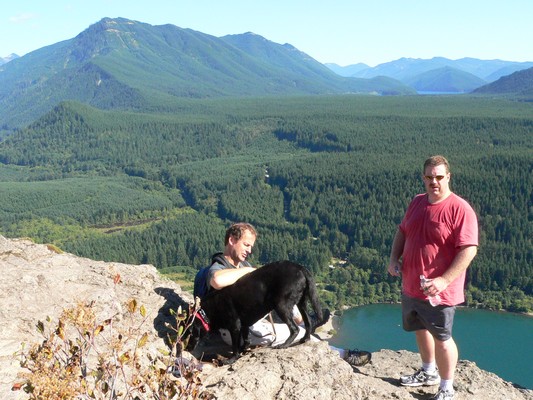
After a not particularly early rise after the luau, I drove my host Roger, his dog Sam and another guest Todd inland to the Cascades where we walked a path up and around an impressive rock buttress to ‘Rattlesnake Ledge’. Didn’t sound like an advisable combination to me, but there were plenty of people returning, so up we went.


Roger, Sam and Todd on Rattlesnake Ledge with Rattlesnake Lake below and the Cascades beyond.

On the Monday I did a bit of work, visiting a fellow companies premises and a couple of meetings. We went sailing on Lake Union that evening. We had oysters and a couple of beers drifting around the lake in light airs. Then we stopped at the South end of the lake and went to a restaurant.


Sunset on Lake Union, Seattle.

The next day I had a good day in Seattle looking around the city with my good friend Kim on his 60th birthday. We had an excellent lunch at Elliotts Oyster House, the best selection of oysters I have encountered. That evening we went to a great Spanish restauarant with tapas, paella and fine wine.

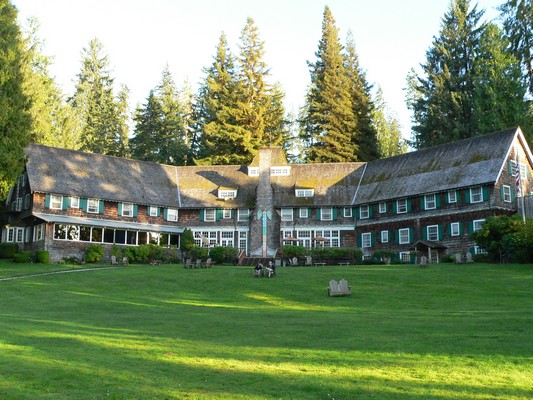
Sadly I had to move on early the next morning. I took a ferry across to the Olympic Peninsula. Stunning scenery, but it was hazy, so no good photo’s unfortunately. I stopped at the Hoh Rain Forest at the insistence of my hosts. Well worth it, stunningly green, mossy and huge trees. I think this place competes with the West coast of South Island, New Zealand for the highest annual rainfall title – around 15 metres per year! That night I stayed at the Lake Quinault Lodge as recommended. This is a lakeside lodge hotel dating back to the 1920s. Peaceful, quaint and great vistas. I had a couple of beers and a great dinner with fine wine.


Lake Quinault Lodge, Olympic Peninsula, Washington

I left early the next morning as I had some serious miles to do in a couple of days. I went South to the mouth of the Columbia River, across it, inland to Portland and then South at high speed down Interstate 5. 450 miles saw me in Grants Pass, Oregon for the night. The next day saw another 400 miles to San Francisco to drop the car off by 2.30pm. I stayed the night and most of the next day in this fine city. This was the end of the trip for me, but I’ll go back to San Francisco and I only scratched the surface of what there is to see in California, Oregon and Washington, never mind all the other states.

Motorbiking in California

I arrived in LA yesterday, Thursday 21st August, and chilled out. Today I decided to do some of the sights, Hollywood Blvd etc. It was a welcome relief to get out of the heat of the city streets and onto the freeway south to Long Beach. This is probably the southernmost point of the trip.


VFR 800 beside The Queen Mary, Long Beach, California.


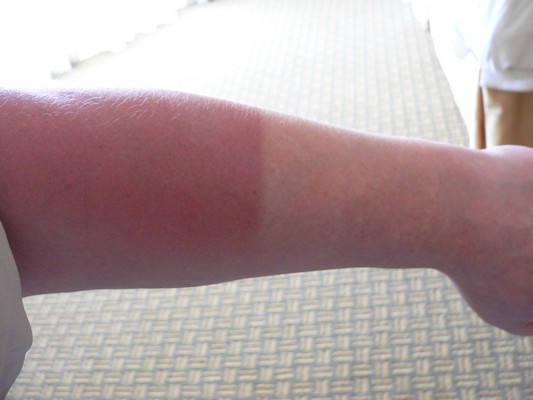
It took me nearly two hours to remember to stop at a drug store for sunscreen, too late!

On way back to Redondo Beach I stopped briefly for a photo-opportunity.


My bro’ lives in Torrance, Scotland.

The next day I got the hell out of LA. First was the the Santa Monica Mountains and the Malibu Canyons. These are awesome biking roads!


Viewpoint looking North at the Santa Monica Mountains.

This pic shows the extent of the luggage required in California. I had jandals, shorts, t-shirt, smalls and a camera in the tank-bag and a map on top. That and a credit card makes for easy travelling.

Next stop, the Rock Store, via the Malibu Canyons and the Mulholland Highway. Saturday is quiet with only a couple of hundred bikes. Sunday is the day, but I couldn’t hang around that long. Jay Leno pitches up with his latest toys and state governor, Arnie, show up most Sundays.


The VFR parked at Rock Store Cafe.

I stopped in Santa Barbara first night out. Accommodation here is either expensive or basic, or if you are late into town and unlucky, both! In the morning I headed inland to the Santa Ynes valley and then back to the coast. I stumbled across a pelican rookery at Pismo Beach as I stayed off the 101 Freeway and kept to the old Highway 1 as much as possible.


Pelican rookery at Pismo Beach.

It had been quite chilly driving up the coast, so it was pleasant for a while to head inland. But, as soon as you cross the first mountain range it gets seriously hot. It was 105F, or about 40C when I arrived in Paso Robles that evening. The ‘Melody Ranch’ motel was without doubt the best of the trip. $50 for the night, and it has been maintained, but not changed, since it was built in the fifties, or earlier.


Classic motel in Paso Robles.

From Paso Robles I crossed the central plains to the Sierra Nevada mountains and the respite of cooler temperatures at altitude. After climbing to over 8000ft, I dropped down the Kern River to the quaint huntin’, shootin’, fishin’ town of Kernville.

The next day curiosity got the better of me and I headed out to the Mojave Desert and Death Valley beyond. I got as far as the edge of the Death Valley National Park and turned back. It was already 120F or nearly 50C, too hot for me and it would only get hotter in Death Valley. The Trona Pinnacles in the next photo are well over 100ft tall. I stopped short as the track was not designed for road motorbikes. The heat-haze is quite obvious.


The Trona Pinnacles.

On the way back to Kernville I travelled this amazingly straight road. This was at least 30 miles of straight blacktop.

From Kernville, with a hangover, I headed back to the coast and stayed in Carpinteria. A great restaurant that night and a great diner for breakfast.

After one last night in a motel in Malibu, I dropped the bike off back in Redondo Beach and began phase two of the trip…

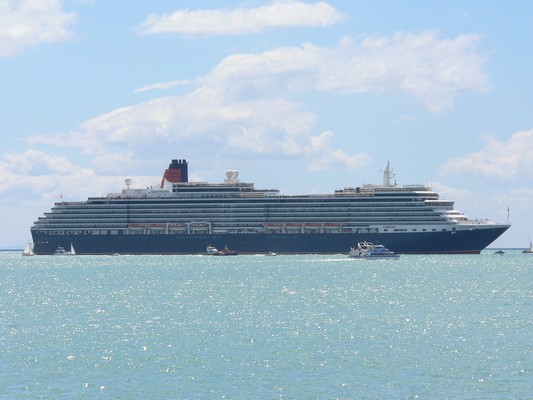
Cunard MS Queen Victoria

This is one big ship. I was quite surprised that it even fitted in to Napier Port. The NZ press touted it as being the biggest liner ever built, but I think it’s actually a wee bit smaller than Cunard’s own Queen Mary II.

queenvictoria.jpg
Ugly looking slab IMHO.

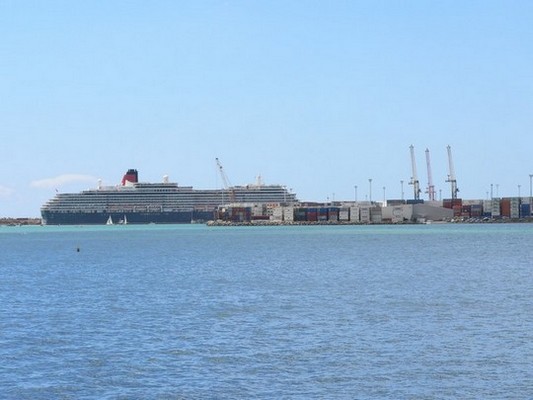
So, they drive it into Napier Port…

victorianapier1.jpg

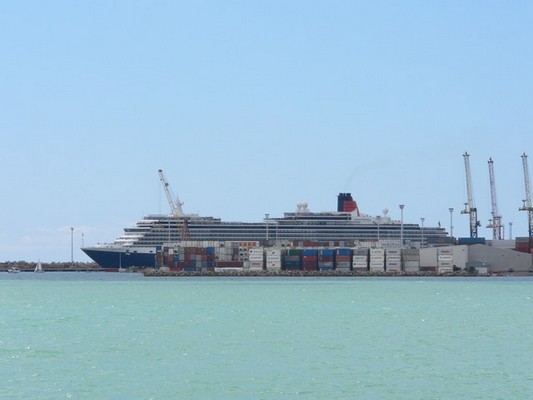
three point turn…

victorianapier2.jpg

and she’s tied up.

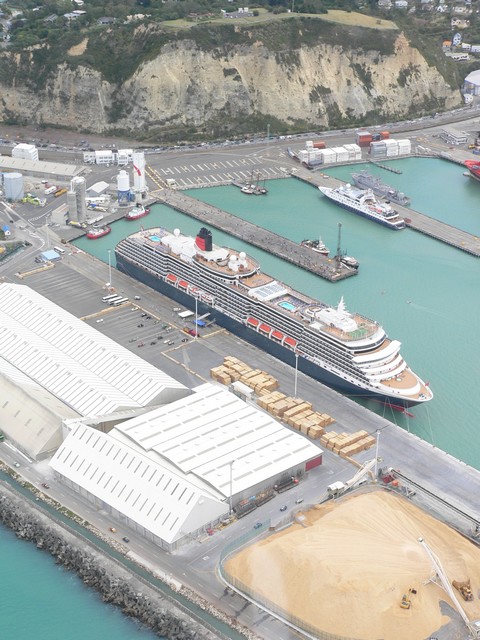
Here’s an aerial shot.

victoriaaerial.jpg

Now, how did I take that picture? Yes it is mine!

You wait weeks (or more, sorry) for a blog to come along and nothing, then, just like buses, three come along one after the other!

Catalina flying boat.

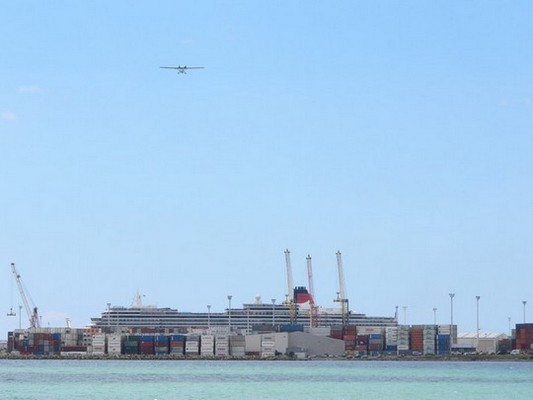
Art Deco Weekend comes around every year around the anniversary of the 1931 earthquake that flattened Napier. For all of the time I’ve been here I’ve seen the the Harvards, the Mustang and the Catalina doing circuits over the weekend. The sound of the Mustang’s Merlin engine is spine-tingling. Close behind that is the beating sound of the twin radial engines of the Catalina. Anyway, here’s a picture of the Catalina flying over the Queen Vic.

catalinaoverqueenvictoria.jpg

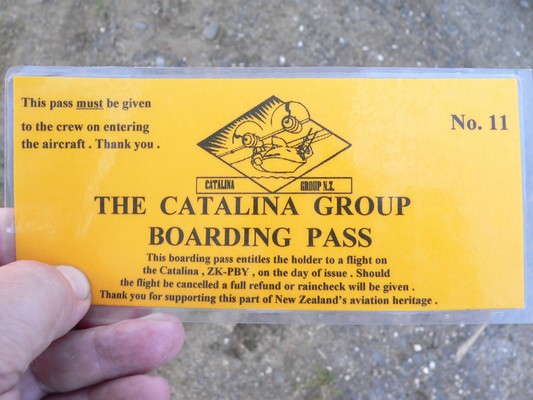
Shortly after this I decided to go and check out the ground part of the air display at Napier Airport. As is the way of NZ the entry was a gold coin, so 1 or 2 dollar coin. I didn’t have either, but a 20c piece showed intent. Whilst looking around and taking a few pics I overheard that it was only $100 for a trip in the Catalina. Not a huge amount to help conserve a historic aircraft and at the same time go for a half-hour flight at around 1000ft over my current stomping ground.

catalinaboardingpass.JPG
My boarding pass for the Catalina flight.

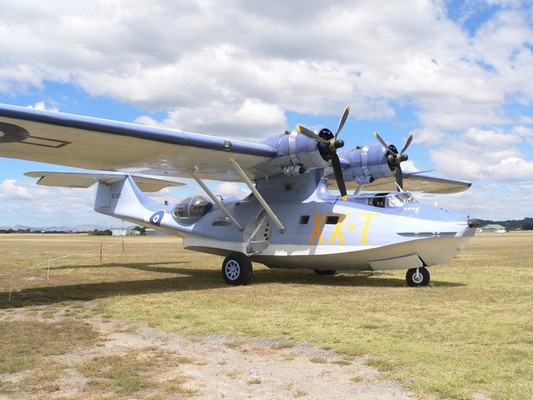
catalina.jpg
This aircraft is only a few years younger than my dad, so it’s very cool that it’s still flying. They don’t land it on the sea anymore, but they do land on some of NZs freshwater lakes like Lake Taupo.

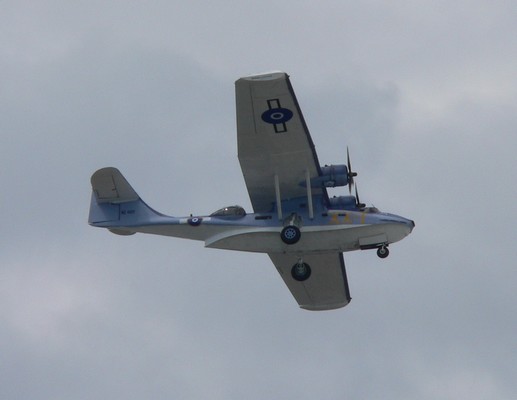
catalinalanding.JPG
On its final approach.

harvard.JPG
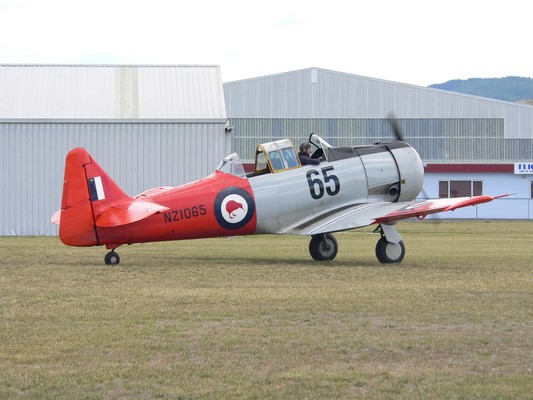
One of five Harvard trainers bought from the RNZAF by Warbirds over Wanaka. Note the cool roundel.

mustang.JPG
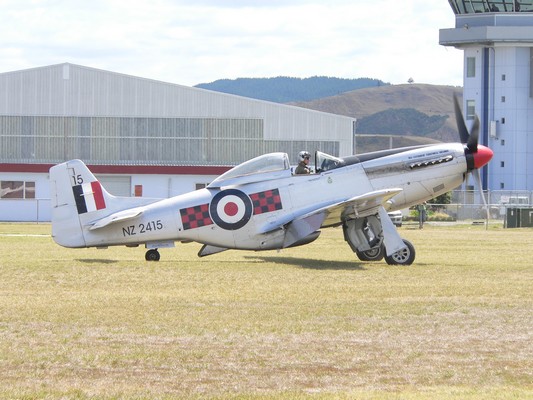
The star of the show, the North American P51D Mustang. A half hour flight in this is available if you have a spare NZ$1500 dollars!!

A(nother) Triumph of British Engineering.

Triumph Motorcycles are one of the last bastions of British manufacturing. OK they went bust in the seventies due to the old favourites of complacency and idiotic unions. But the name was bought by an astute business man from the building trade. Not a biker or with any knowledge of the industry, but with a keen eye for a business with serious potential, John Bloor bought the Triumph name. In 1990 they launched a new range of Triumph motorcycles.

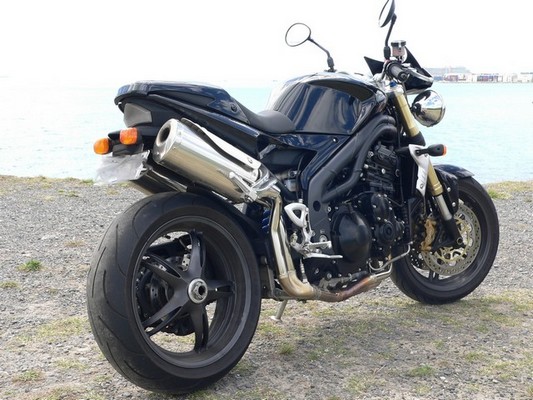
I bought a second hand 1992 Trident 900 in 1994 and covered a lot of the UK and a fair bit of Europe on it over a period of about five years. I’ve had a few bikes in between, but always liked the look of the Speed Triple. When the latest Speed Triple model was released in 2005 I REALLY wanted one. I’ve been saving for 2-3 years and in mid-January 2008 the first one I’d seen in black, of course, and with the accessories I wanted at a reasonable second hand price came up. Imported from the US , but that didn’t bother me. So I flew down to Christchurch and the guy kindly picked me up at just after 0800 in the morning. The bike had only done 7500km including some use by the importer. It has a couple of blemishes, but nothing you’d notice unless you know where to look. At around 0930 I departed Christchurch for the long trip back to Hawkes Bay. It was four-plus hours to Picton, half an hour wait, three hours on the ferry, and another four-plus hours till I arrived home at 2130, a twelve hour journey. I hurt in places I’d forgotten you could hurt as it had been too many years since I’d spent a whole day in the saddle. Credit to the bike though, despite it’s sporting pretensions, it’s a whole lot more comfortable than the TL1000 which was crippling in a medieval way.

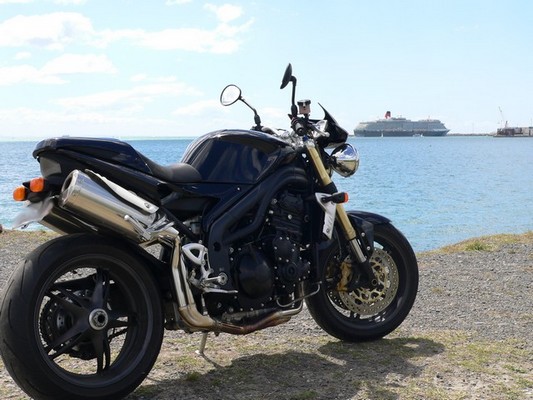
tripleandvic.JPG
This picture shows my new toy with the massive Queen Victoria, one of the biggest liners ever built, being shepherded into Napier Port.

On a bike capable of the national speed limit in first gear, not having a fairing, as the TL1000 did, makes you very aware of the speed. Advantageous in both self preservation and license preservation terms.

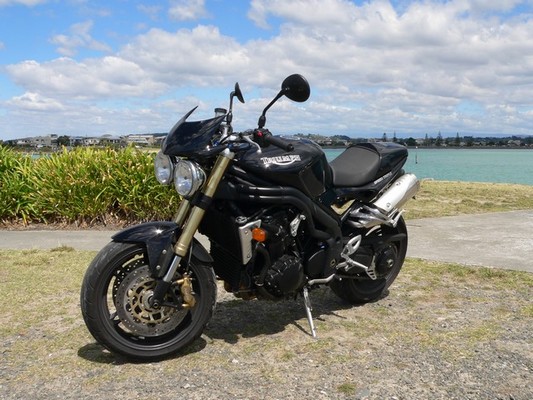
speedtriple.JPG
Can’t decide if this view is better. No big queen in the background this time :P.

I’m really looking forward to touring NZ on this bike. The East Cape is on as soon as good weather coincides with a weekend or when I can grab a few days off work.

The South Island needs to be taken two or three weeks at a time, so needs a bit more planning.

I’ve got clear memories of the Trident (the whine of the straight-cut primary gears), but the exhausts on the speed triple are much louder – they sound great – but are legal and not too attention grabbing. The Yoshimura cans on the TL1000 used to set off car and shop alarms…… They’ve also made the induction sound audible which is very addictive. The handling is superb, except the suspension is a little jarring front and back. I’m pretty sure I can adjust that out.

speedtriple2.JPG

GPS Tracking Gannets at Cape Kidnappers

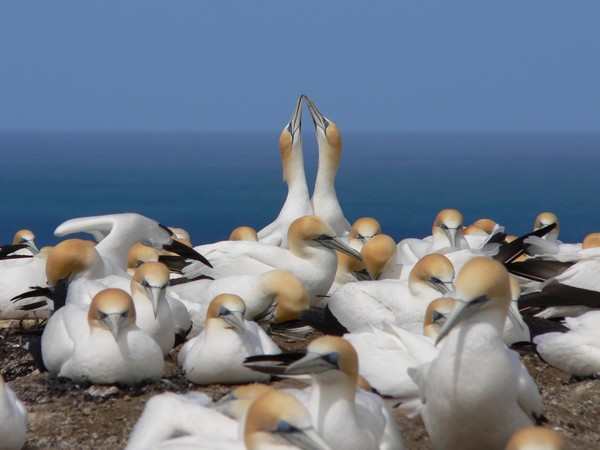
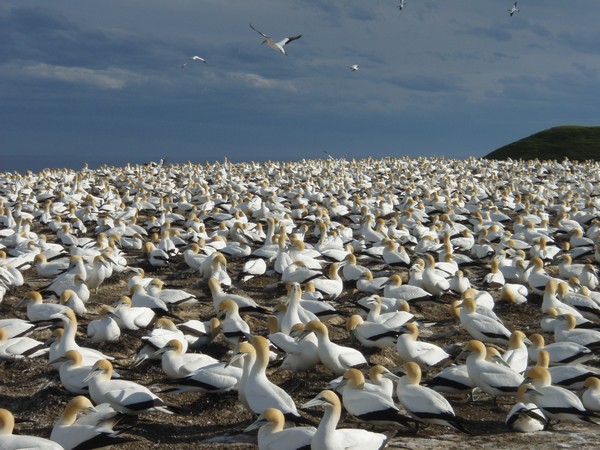
Cape Kidnappers, only a few kilometers from Havelock North, is home to the largest mainland breeding colony of Australasian Gannets, sula serrator. The colony is within the Ocean Beach Wildlife Preserve and this organisation are interested in knowing more about the ecology of the gannets. They will buy µGPS GPS trackers, but this is a new product and to give them confidence Sirtrack provided two trial units to prove there effectiveness. I headed out to assist a PhD student, Steffi, from Auckland University who is studying the foraging ecology of this species at the Cape and another colony on an island off Auckland. I was there to share the users experience with the technology and, where necessary assist in the setup, deployment and recovery of the devices. This provides invaluable feedback to improve this and all products and specifically address any deficiencies in the manual for the µGPS. It was convenient for Steffi as she was alone this week and it takes two people to handle the gannets, one person has to hold the head with one hand to control the potentially lethal beak and the wings with the other hand to avoid any damage, especially in the almost constant blustery conditions conditions at the Cape.

Looking across the Plateau colony at Cape Kidnappers.
The plateau colony at Cape Kidnappers.

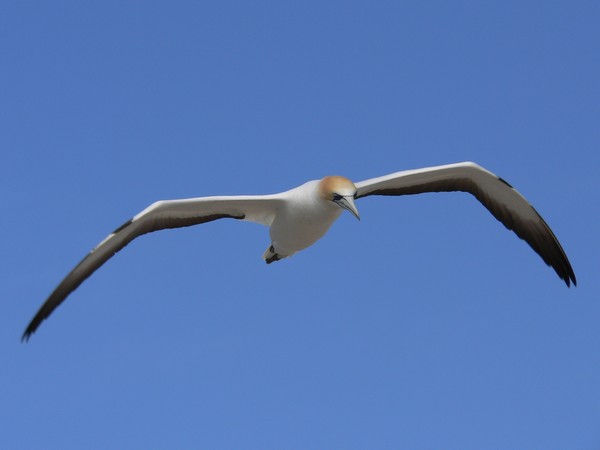
Flying gannet against a typical Hawkes Bay sky.
A gannet flying above Cape Kidnappers.

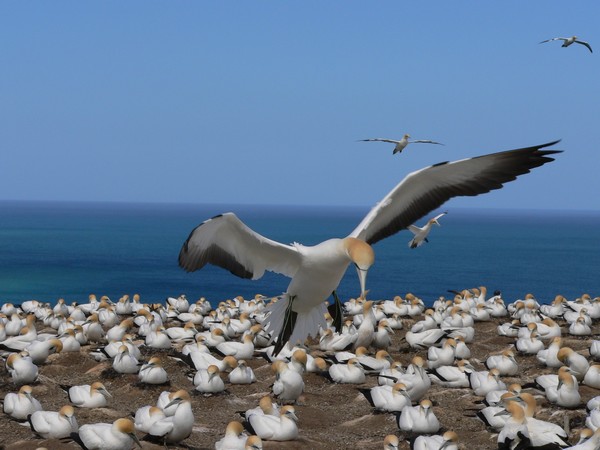
A gannet on final approach. Can be beautifully controlled, or notÂ…
Final approach, committed, could be perfect, or head over heals.

A pair of gannets in courting display when one partner returns.
A courting display as one partner returns.

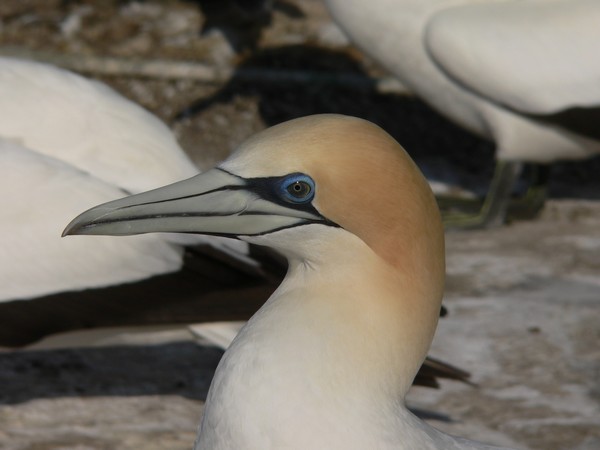
head02.jpg
A close-up shows the striking markings and colours of the head and shows one of the large and incredibly effective eyes.

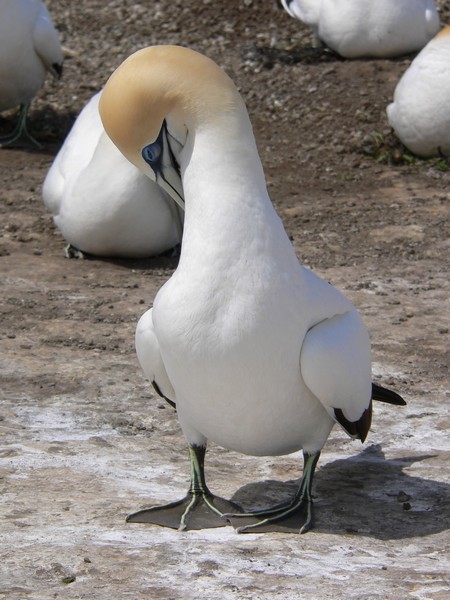
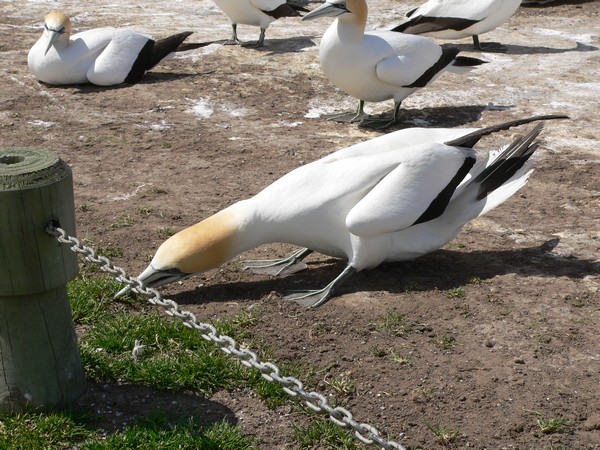
A gannet preening.
A gannet preening shows some more of the stunning coloration.
A gannet collecting grass for nest lining.
The gannet won and scored some grass to line its nest.

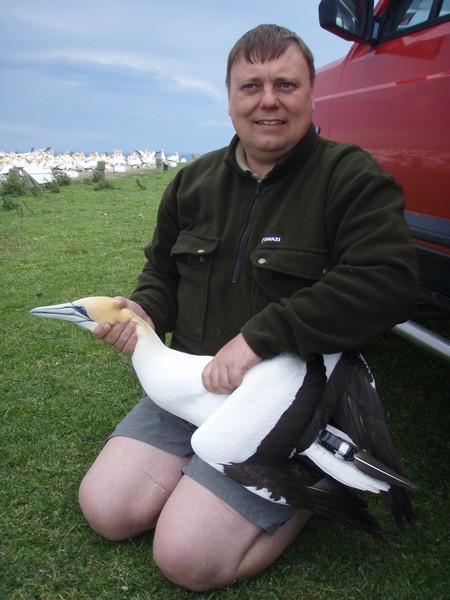
Holding a gannet with a newly attached µGPS taped to a couple of tail feathers.
A gannet with a µGPS taped to a couple of its dozen tail feathers. The bird will carry the device for just a day and then give us a new window into where these beautiful birds forage.

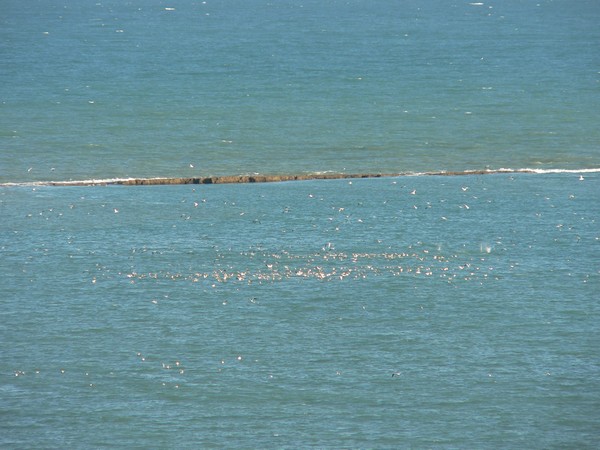
Gannets feeding next to the Black Reef
A load of gannets feeding next to the Black Reef.

Hideaway Island, Vanuatu

I had originally intended a break in New Caledonia. Beautiful, huge lagoon which is reasonably sheltered for water sports, good food with the French influence and it’s named after the old country. However, after some consultation with the travel agent it became clear that New Caledonia was expensive for no obvious reason and that there was an attractive option in nearby Vanuatu – still linked to the old country as it’s part of the New Hebrides. Hideaway Island ticked most of the boxes and came in at least 30% cheaper than New Caledonia for a secluded resort rather than a hotel in town – done deal!

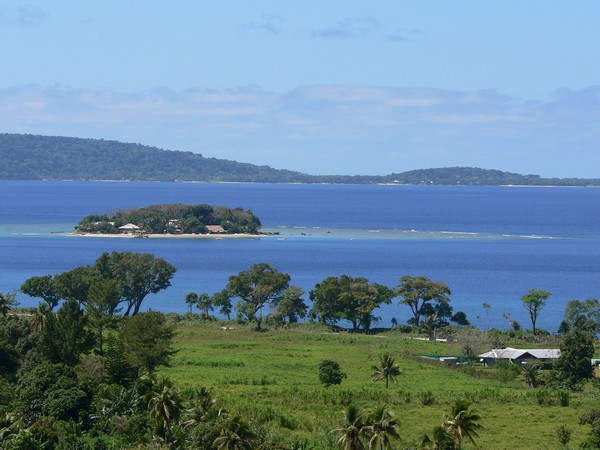
Hideaway Island
Hideaway Island from the main island, Efate.

I arrived two weeks ago Sunday. Even at 8.30 in the morning it was hot and humid. It is about ten minutes from the airport to Mele Beach. From there, five minutes on a little ferry. The island is as small as it looks with only about a dozen bungalows and a couple of backpacker dorm houses. then there is the bar and restaurant, dive shop and activity hut and gift shop. My waterside bungalow was simply furnished, but very comfortable. It was East facing, so morning sun and shade in the heat of the afternoon – perfect.

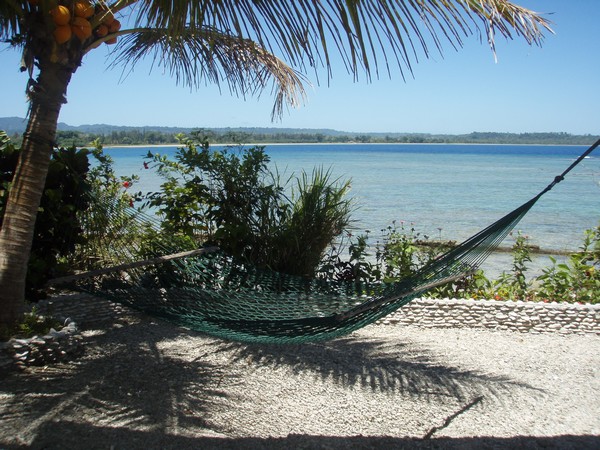
Hammock
The view from the patio doors of my bungalow – not too shabby!

It had been a hellish six weeks running up to my well-deserved break with my fellow manager away for nearly five of those six weeks. Throw a delayed product release and a couple of major problems blocking production into an already hectic schedule and you end up with some crazy hours just to stay on top of the seriously urgent, never mind anything else. So, I did a fair bit of sleeping and dozing in the sun in the hammock for the first day and a bit. But, then I got bored. I’m not one to lay on a beach for a week, I need to do things. I explored and found that the catamaran (singular) was in pretty poor nick as were the kayaks. Two of my intended pastimes immediately less attractive. I went snorkeling and the reefs and fish were awesome. I decide to do the introductory scuba dive and see how it went – an option I was aware of, but not set on. I inquired about the open water dive course and doing the introductory first to see how I enjoyed it. Momentum gathered quickly and I was suddenly enrolled in the open water course and doing the introductory dive in an hour – wow! Well, what the hell. The first dive involved a quite a few drills and definitely took me out of my comfort zone. Having completed that I was given a textbook and a bunch of questions to answer – homework. Still, not a bad place to have to do it! It was good timing on my part as the island was pretty empty, so I had an instructor to myself.
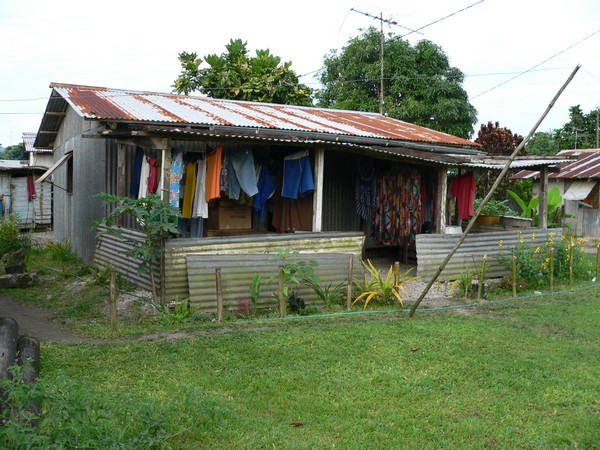
On Tuesday afternoon a group of us went to the local village, ‘Mele’. We were shown round by a staff member from the island who lives there. The houses are primitive, but when the temperature probably never drops below 20 Celcius, who needs windows.

Mele village house.
A typical house in Mele village.

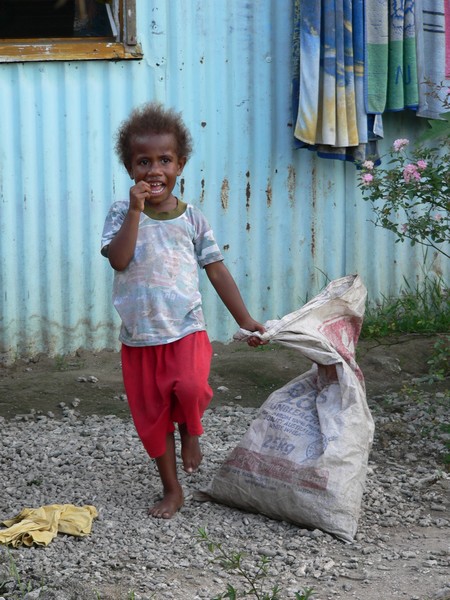
Mele village child
The kids are so innocent.

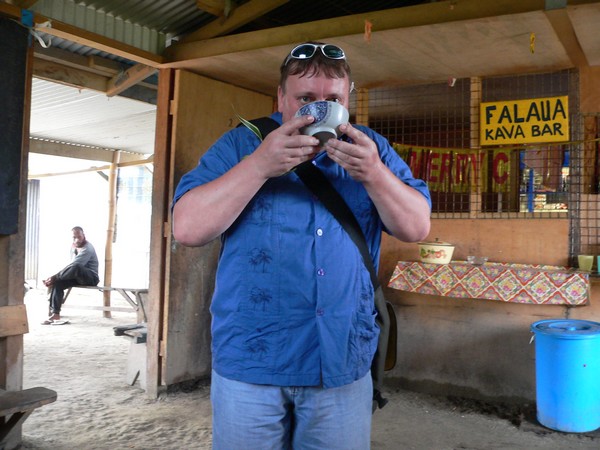
At the end of the trip we went to one of the village ‘kava’ bars to try the kava. This is a drink made form the kava plant root which is pounded with water to make a muddy beverage. During the years of joint British and French rule, kava was banned, but the locals had ready access to alcohol. This resulted in the usual drunken brawls. Since independence, kava is again allowed and there is no more brawling as kava is a sedative rather than antagonist. It makes your mouth numb and gives a slight, relaxed high similar to marijuana – I’m told.

Kava bar.
Supping on the kava.

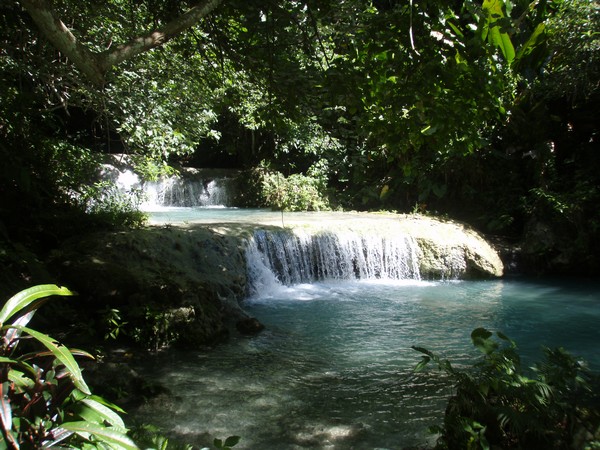
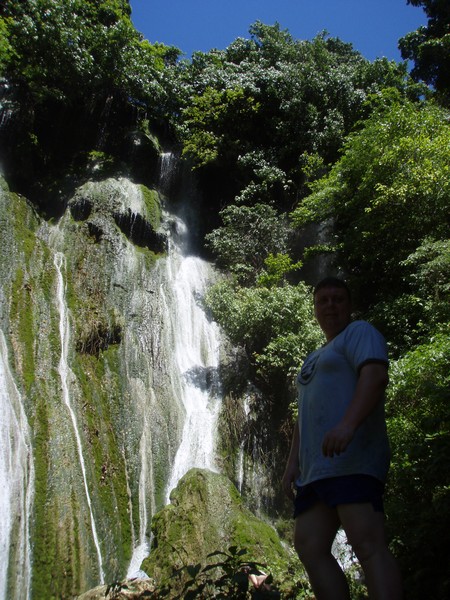
Homework all good, followed by some theory on dive tables and then more practical just off the beach. Not easy, but I was a lot more relaxed and breezed through it. Both instructors were off the island the next day and one of the girls I was hanging out with was heading to the ‘Cascade Waterfalls’, above Mele village, so I joined her tour.

cascade1.jpg
Paradise, and it only gets better.

cascade2.jpg
The main waterfall.

cascade3.jpg
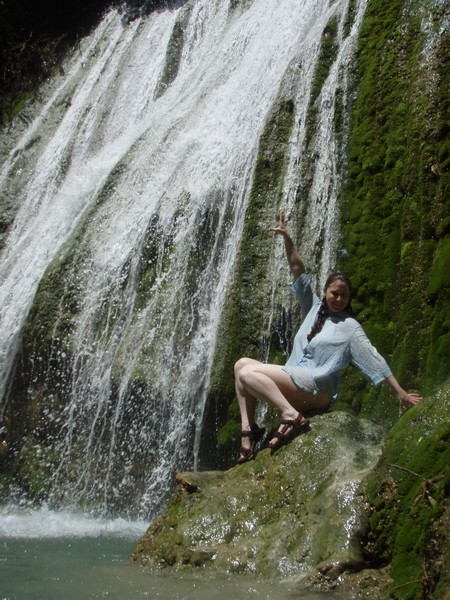
Karli has a ‘Priscilla’ moment by the main Cascade Waterfall.

cascade4.jpg
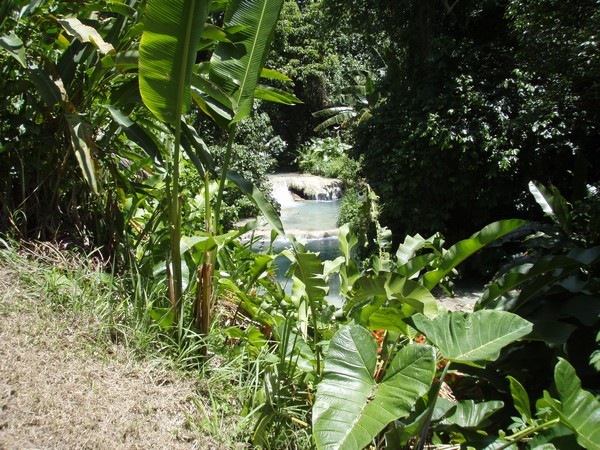
Cool tropical rainforest.

That evening was the, so called, Melanesian Feast – buffet dinner would suffice. Compulsory headgear, more kava and some more good food, so no complaints. Oh, and some singing and dancing around the fire.

feast.jpg
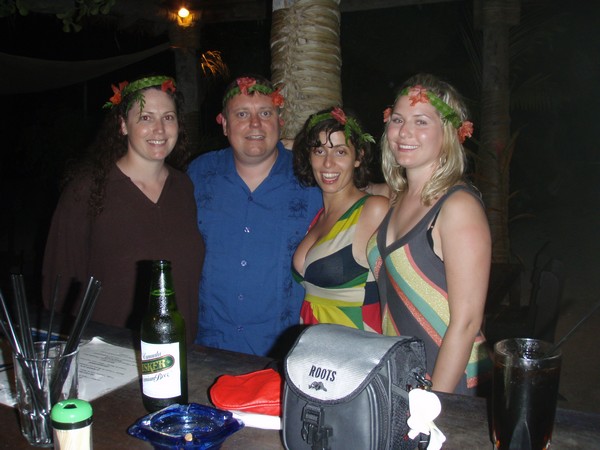
Me and my beautiful companions from the week after the feast – all sporting de-rigeur headgear.

On my last full day I had three dives. The first started with surface drills which I’d pretty much mastered by now and then drills on the bottom at around six metres. The same as I’d done in three metres, but with some choppy waves. All good. Then a half hour cruising around the reef as deep as twelve metres. Having passed all my drills in the first open water dive, the next two were purely recreational, but necessary for the certificate. So, that was that, now a certified open water diver.

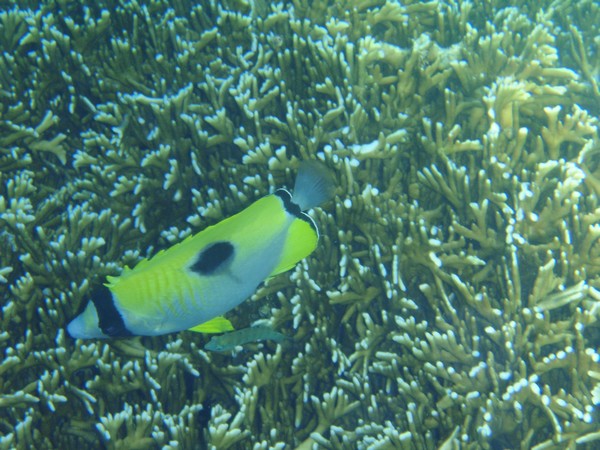
That afternoon I went for a snorkel and tried a bit harder with my new camera. I’d not taken it diving as I was going deeper than the maximum 10m and didn’t want, or need, the distraction. There was a lot of surge from the swell, so most of my initial pic’s were crap. Heres one that wasn’t too bad.

Reef
A Butterflyfish above Delicate Fire Coral.

A great holiday and met some cool new friends. Learning to dive was the cheap bit, now I need to buy the gear and keep doing it. I may very well go back to Hideaway Island as there are a whole bunch of dives beyond the twelve metres I was limited to which sound awesome.

The Kopuawhara Express

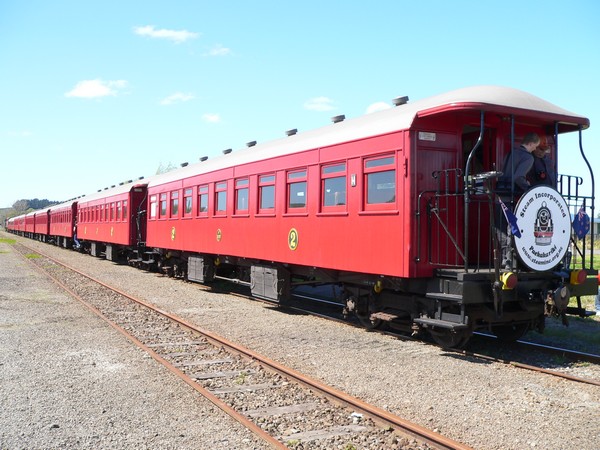
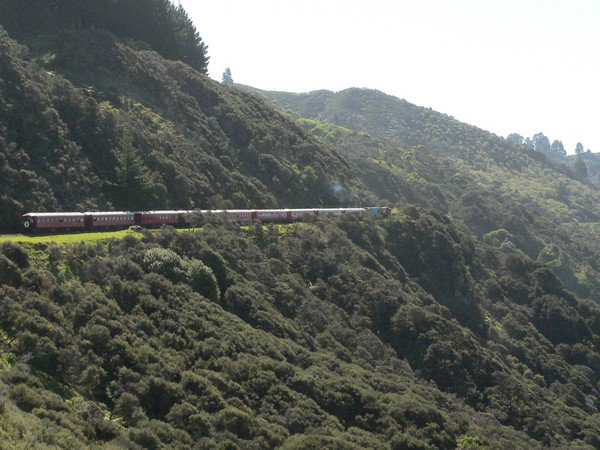
On the last Saturday of September I went on a train trip from Napier to just south of Gisborne and back, an all day trip. This line has been closed to passengers for many years and runs only a couple of freight trains a day during the week. It is one of the classic New Zealand rail routes with serious ascents and descents, many tunnels and big viaducts. It took a long time to build and a lot of people died in the process, mainly in one flash flood. With such little traffic it could close any time, so worth a day whilst the opportunity is still there. The trip was run by Steam Incorporated who maintain the only mainline certified, fully restored steam locomotives and rolling stock in New Zealand. This one wasn’t steam, but did use their restored steel and older wooden carriages. Whoa, sounding like a trainspotter there – I was in it for the scenery and a bit of history.

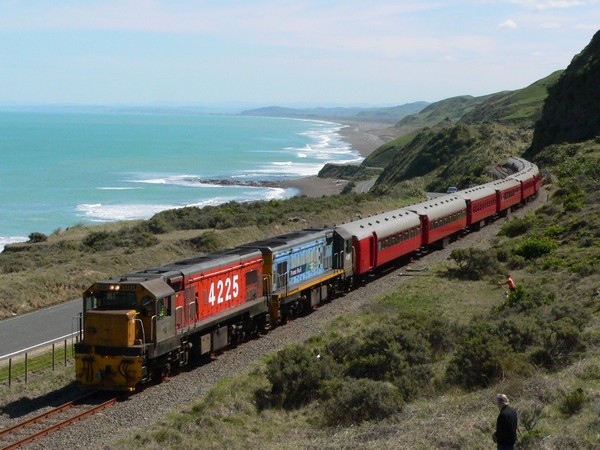
Photo-stop near Blacks Beach
Here’s the train near Blacks Beach, just short of our final destination of Beach Loop.

Leaving Napier the track skirts the residential back yards and out over the bridge across the lagoon at Pandora. Once out of Napier we pass the airport and through Bayview to the Esk Valley. From there it is a long, steep climb through a few tunnels and with vertigo-inducing drops alongside the Esk into the ranges to Waikoau. From here the line levels out and heads across the plateau across three huge viaducts, the Waikoau, Matahourua and Mohaka before dropping down to Wairoa.

Wairoa Station
Some people jumped off at Wairoa to watch rowing on the Wairoa River.

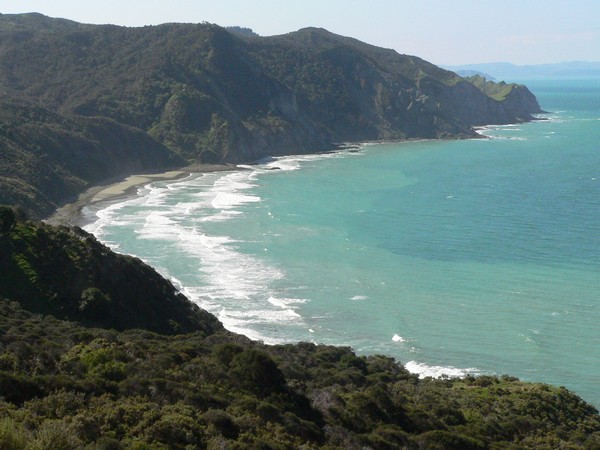
Onward to ‘Beach Loop’, the final passing loop just shy of Gisborne. We cut across the Mahia Peninsula, past the old fishing harbour of Waikokopu before climbing up and past the Kopuawhara Stream, the site of a disaster where 21 people died in 1938 during a flash flood whilst the railway was being built. Next through the 3km Tikiwhata Tunnel and a couple of shorter tunnels before we stopped for a picnic stop just short of Beach Loop.

BeachLoop1
The train heads off to Beach Loop to swap ends.

BeachLoop2
The Beach Loop beach.

On the return leg I secured a good vantage point on one of the open balconies at the end of one of the old carriages to take some photos.

Bush
Typical New Zealand bush from a little viaduct.

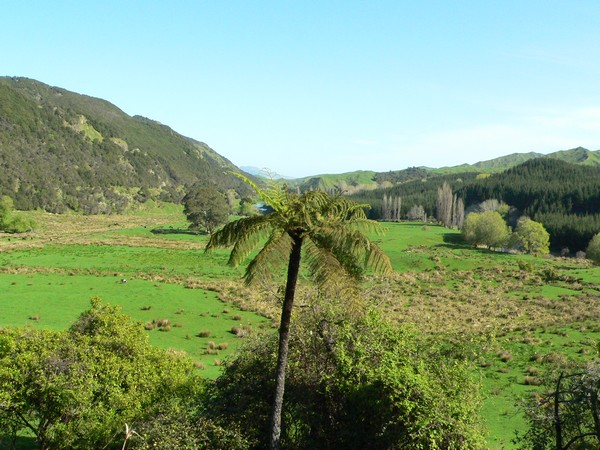
Tree Fern
A Tree Fern, or Ponga Tree with a bit of New Zealand behind.

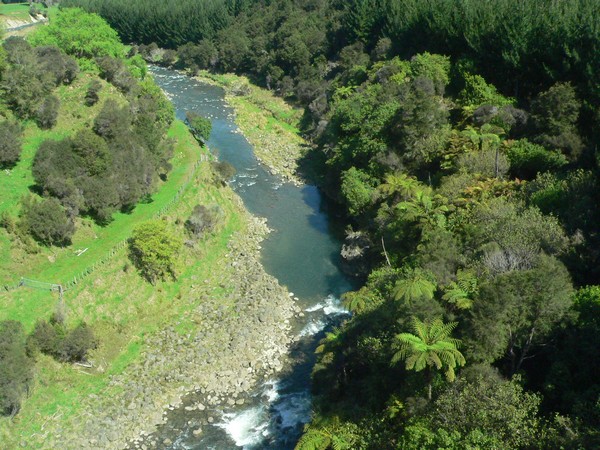
Mohaka Gorge
The mighty Mohaka River and gorge.

Mohaka Viaduct
Approaching the Mohaka Viaduct, the biggest in New Zealand at nearly 300m long and 97m above the Mohaka River.

All in all, a great day out. Perfect Hawkes Bay weather with not a cloud in the sky, fantastic scenery and a bit of history to boot.