In and around Queenstown with ‘Big Ed’

In May, my old friend Ed was in Queenstown for a conference. Ed and Clare considered bringing the two kids down, but they’re too young to appreciate or remember it and it’s a hell of a journey from the UK, so Ed came on his own. Given the time available, it was simpler for me to fly down to Queenstown for a long weekend. I arrived on the Friday morning at about 9.30 after the red-eye out of Napier at 6.40 am. I picked up a hire-car and then Ed from his hotel in Queenstown. After a quick cafe stop for me to get a late breakfast – short connections, no chance flying down – we went to explore around Queestown. We stopped at the ‘Shotover Jet’ and watched that. It’s hellish expensive at $120 for about 10 mins (they claim something like 20 mins, but there’s a lot of briefing time. We decided to skip that and look at the Dart River jet trip the next day. Anyway, we headed up the hill from Arthurs Point towards Arrowtown, but curiosity took us up the road to Coronet Peak and Skippers Canyon. The sign saying ‘rental cars may not be insured’ at the entrance to the Skipper’s Canyon road was just too tempting. I took it easy as there were a few rocks scattered around and I didn’t want to damage the underside of the car – god knows what it would cost to recover it.

 Impressive and scary drops in Skipper’s Canyon

We passed couple of Landrovers doing a tour at a thankfully suitable part of the track to get past easily. The occupants looked suitably ripped off realising the track was far from rugged enough to stop a Ford Focus. There were sections that would clearly flood over at the slightest hint of rain though, so don’t be too bold.

We returned to Q’town and had a bite of lunch. We booked to go on the Dart River jetboat safari the next day from Glenorchy. I had booked us into the Glenorchy Hotel that night. We drove there and had a wee snooze, me from a very early start and Ed from a very late night. We had a few beers, a very average dinner, made better only by the Highlanders beating the Hurricanes in Invercargill.

After a lazy Saturday morning snoozing to the sound of rain on the roof we went for breakfast at the wonderful Glenorchy Cafe down the road. Cool music, great food and great coffee – we both had a second coffee because it was so comfortable. After a walk down to the lake and around a local wetland area we arrived back just in time for the jetboat trip. The bus trip up to ‘Paradise’ near the top of the jetboat trip was great and the driver funny and very informative. We had a wee walk through the woods to the pickup point. We maneuvered to the back so we would hopefully get to sit in the front of the boat, all the others filing forward like sheep, but we needn’t have worried, the driver told Ed he would only have any legroom sitting in the front, so we were in! The trip took us up river for a while and then all the way back to Glenorchy, about one and a half hours. At speeds of up to 85 km/h it was an awesome ride! These guys really know the river, the boats just scraping the gravel in the shallow, wide, braided sections of the river.

 Also not meant to take hire cars up here – 5500ft at Snow Farm Lodge


Home Brewing – No Half Measures!

Frog, my neighbour, had to weld a pipe coupling to an old beer keg for someone a while back. This set us thinking and we made some mental notes. Suffice to say, a few months later we had bartered, bought and scrounged some beaten up old stainless steel kegs. Frog has the hoarding gene, passed down through generations of Flanders. Scrap, especially stainless is always reclaimed, so we had enough pipe and couplings to recycle for the job. He set about welding the pipe and couplings into the kegs and I got the rest of the gear together. We decide to start with kits to make sure it was all working and then try from scratch later. I did some research and got a few kits, brewing sugar, sterilising chemicals, thermometer, airlocks and so on. One of the main requirements of brewing is plenty of hot water, so we cut the top out of one keg and welded in a fitting for a 2KW heating element, a sealed tube for a dairy thermostat (up to 120°C, so can boil water) and a fitting for a tap. We lagged the keg to make an effective boiler. We fitted a grate higher than the element so that it can be used for preserving too.

2kW, 50 litre keg boiler. Takes 2 hours to boil. Can be used for crustaceans and preserving too.
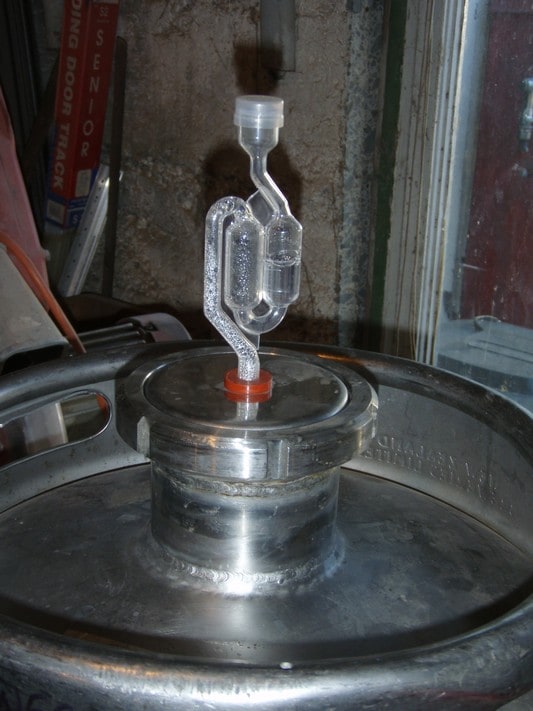
OK, so we have hot water for cleaning , dissolving and adjusting the temperature for the yeast. One kit is designed for a brewing bucket of 23 litres, we are using 50 litre kegs, so use two kits. The process is that we warm 2 tins per keg to make it runny. Sterilise the keg, blanking plate, o-ring, bung and airlock. Next the can contents are poured into the keg, the cans rinsed with boiling water also to dilute the syrup and then the brewing sugar poured in and stirred to dissolve. The keg is then topped up with cold, filtered water to almost full. A temperature sensitive label lets you adjust the temperature to between 18°C and 28°C before adding the yeast and stirring a little. Now we fit the sterilised o-ring, blanking cap (with hole), bung and airlock with filtered water.

 Keg with 100mm coupling fitted with blanking plate, bung and airlock.
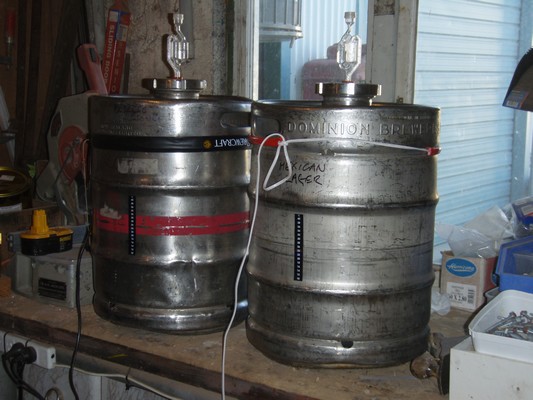
 100 litres of beer brewing for the Christmas and New Year holiday period.

The instructions state 4 to 7 days between 18°C and 28°C. I’ve aimed at the lower end of this scale, 20°C to 22°C. Rather than measure the S.G. (Specific Gravity) I simply wait until the the fermentation has just about stopped which typically takes at least 7 to 10 days. At this stage, the beauty of the keg over bottling is that it’s a lot less hassle. Using the pipe cleaning set up the pick-up pipe and coupling can be sterilised and rinsed. Normally a teaspoon, or 5g, of white sugar is used per bottle. I remove the blanking cap and airlock, add around 350g of caster sugar straight to the keg, stir with the pick-up pipe, or a sterile spoon and then seal up and tighten the lid/pick-up/keg-coupling good and tight to withstand the carbonation pressure. Next keep at 20°C or more for a further 4 or 5 days to complete the secondary fermentation.

 The coupling welded into a blanking lid and the pick-up tube extended to allow for the new neck on the keg.
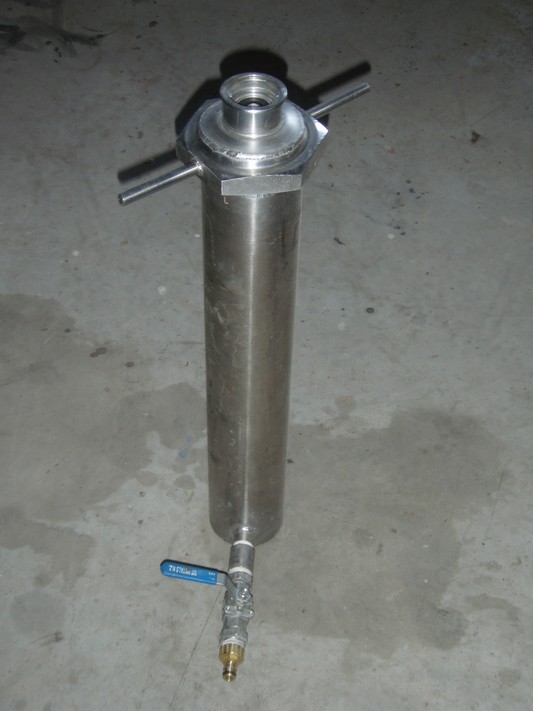
 The cleaning set up can clean the keg pick-up/coupling and the pipe and tap for pouring.
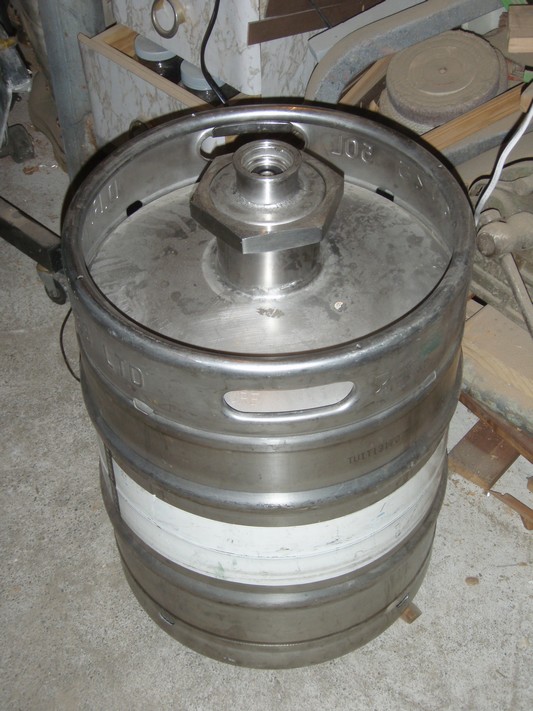
 50l of East India Pale Ale from kits from Black Rock maturing.

Immediately after second fermentation the beer can be drunk, but it is better to let it mature for a few weeks, or even months in a cool place.

At least for the lager/pilsener beer it needs to be chilled, especially for a New Zealand summer, so Frog plumbed an old fridge freezer to chill and pour the beer.

 Beer in fridge …

 … tap on fridge …

 … crystal-clear, refreshing, cold beer in glass – happy days!

Is it worth the effort? Well, it costs about 1/4 of the price of 330ml bottles, stubbies, and we’re not even trying to source the ingredients at a better price or in bulk yet. No non-recyclable glass bottles to dispose of. Also, Frog assures me he doesn’t get the acid reflux he gets with some of the commercial brews. A wee bit of planning, a bit of prep a couple of hours in advance and about an hour of work – enjoyable and satisfying too!

Nelson and Golden Bay

A couple of weeks ago I traveled to Wellington and then Nelson with a colleague, Chris, from work. We had meetings with DOC (Department of Conservation) in both cities. After our meeting in Nelson on Friday morning we drove down to St Arnaud beside Lake Rotoiti in Nelson Lakes National Park.


Lake Rotoiti, Nelson Lakes National Park.

If your hovercraft needs topping up with eels then Lake Rotoiti is not the place!

It would be like shooting fish in a barrel.

I dropped Chris off at the airport later that afternoon. I checked in to the Custom House backpackers hostel that night which was exactly what it said on the tin. I had a great meal on Friday night at the Boat Shed Cafe, a Nelson institution.

On Saturday morning I had breakfast at Lambrettas cafe, another Nelson institution and definitely recommended.

I was a little disappointed it was cloudy when the forecast was for clear skies. I then drove to Motueka, a wee bit inland and up, up, up. The gravel track up to Flora Saddle carpark is a cracker. There are sections that are seriously steep, steep enough that an aggressive approach was required in a little front wheel drive rental car. There were pitches where I was trying to maintain some speed, but was getting slower as the front wheels were struggling for traction until the gradient eased a bit. Fun, but not for the faint-hearted when you see the drop-offs at the side of the track. A good friend recommended walking here and he was right. Starting at over 900m, well above the low cloud below, it was brilliantly clear and sunny.


The splendid view from just below the Flora Saddle.

I walked part of the Flora Track, past the Flora Hut and on to the Gridiron Rock Shelters, the site of one of NZ’s gold-rushes.


Gridiron Gulch sign tilts to the gold-rush history, used to be a population of 471 apparently.

The Upper Gridiron Shelter has a hut with bunks and a fire-pit outside. The Lower Gridiron Shelter is alfresco but looks like a cool place to spend a night.


Lower Gridiron Rock Shelter

A 15km round-trip, not particularly challenging, but stunning scenery and interesting history.

I had booked a night in a cottage at the Eatery on the Rock, just outside Takaka, the hub of Golden Bay. From Motueka there is the amazingly tortuous Takaka hill road over to Golden Bay. I thoroughly enjoyed driving my little rental car like I stole it. You can have a lot of fun in the smallest rental car on a really twisty road and you’re nowhere near the speed limit! Whilst enjoyable in a wee hire car, it would be fun beyond description on two wheels – it could outdo the amazingly twisty road I traversed on a rental VFR800 in the Sierra Nevada’s a couple of years ago – even if that topped out at 11,000 ft compared to less than 3000 ft on the Takaka hill road.

The weather forecast for the Sunday was appalling, so I explored as far as I could that evening. Golden Bay is a beautiful area and I will definitely head back on the motorbike, to tramp, or to get on, or in the water. I had a great dinner, the pan-fried deep-sea dory was cooked to perfection. Overnight the weather did turn to poo as forecast. It was absolutely chucking it down, so I headed straight back to Nelson and managed to get an earlier flight home to Hawkes Bay.

First trip in the GT car – The Wairarapa

I left work at 1630 on Friday and drove to Martinborough where I had booked a b&b for the night. Arrived at 1930 and enjoyed a glass of wine with the host and a couple of friends, very civilised. 5 minutes walk to the town centre and watched some of the rugby league match on the TV over a beer, but too busy and noisy for eating. Settled on ‘Est’ over the road from the hotel and had an excellent meal with a very nice glass or two of local gewurtz.


Martinbourgh main drag, cool old ‘Western’ style wooden buildings.

A nice breakfast of scrambled eggs on toast with a couple of rashers and a great conversation with the host, a retired wildlife documentary maker who had been to the NZ sub-antarctic islands. Went for a drive to look at the wineries around the town and then back to the centre for a wander around. After a coffee I headed South to Lake Ferry – yes, used to be a ferry over a lake.


Looking North from Lake Ferry.

After a nice, if a bit too soggy fish and chips (tip: salt your wet fish to dry and firm it up a bit before rinsing, battering and frying) at the Lake Ferry Hotel I headed down to Palliser Bay, the fishing community of Ngawi and Cape Palliser. Two things of interest at Cape Palliser, the New Zealand fur seal colony and lighthouse.


New Zealand fur seal at Cape Palliser


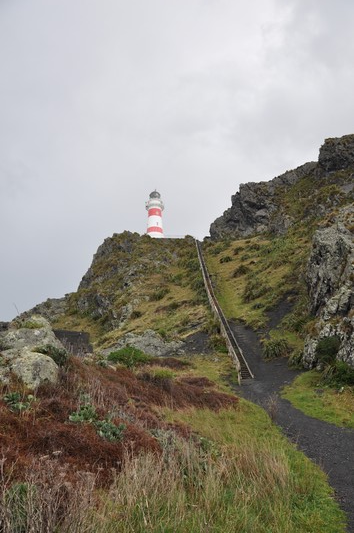
Cape Palliser lighthouse at the top of more than 250 steps.

Then back to Ngawi, the town with more bulldozers per head than anywhere else on Earth – apparently.


A very few of those on offer with the S4 in the background.


There is also a pink one – called ‘Babe’


A serious bit of hardware, a commercial boat and mobile dock shifted by a massive ‘dozer


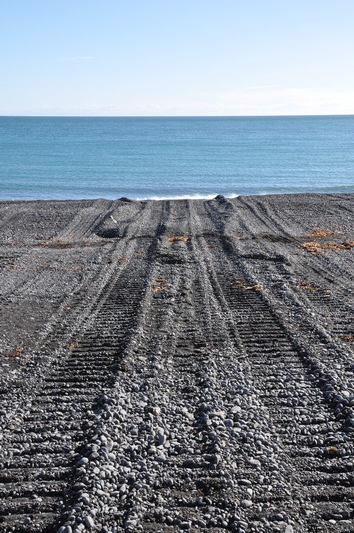
The tracks of said outfit down the increasingly steep shingle beach


A fan of the local All Black and Hurricanes star Tana Umaga

After Ngawi I headed back North a bit to Kawakawa Station and my accommodation for the night. I had booked their cottage and dinner with the hosts.


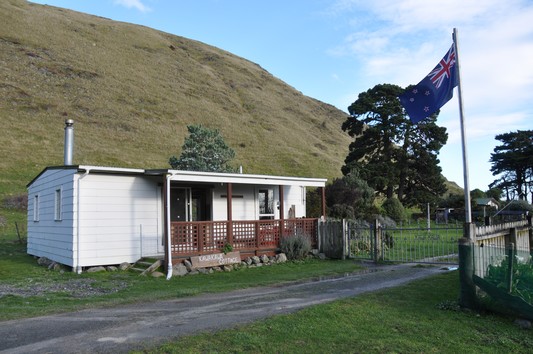
The cottage


5000 acres of seriously steep country run with sheep and Angus cattle, worked mainly on foot and horse with quad bike where possible

Dinner was a delicious Angus beef and venison (wild kill on the station) pie. For breakfast I had home baked bread and eggs from the farm chooks, so scrambled eggs on toast. Very pleasant and relaxing night. On the Sunday I headed back North to Hawkes Bay and home sticking to the back roads until Masterton.

The next trip is likely to be to the ‘naki, Taranaki, over Labour day weekend. After that the East Cape either by bike, or S4 when the Pohutukawas’ are in bloom.

The sensible thing


When the recession bites and the company you work for is working very hard to keep sales figures up, a bachelor must do the sensible thing and buy an expensive luxury sports car. Seriously though, I haven’t explored NZ enough and I want to do it in a wee bit of style. I’ve never owned a vehicle with electric windows, central locking or any of that. Now I have very cool car with automagical everything – a proper GT car (Gran Turismo). It also goes like a stabbed rat and sticks to the road like glue. Fuel consumption is as good as it gets for a 4.2l V8, but cruising at 100km/h (‘ish) gives about 25mpg. Might never be in a position to own such a luxury again, so I’m enjoying it while I can! More to follow…

Home Produce

Living as I do on a two acre section, and given the obscene increases in the cost of food, my neighbour/landlord Frog and I decided to put in a vege garden. We worked out where to put it, but it involved building around 50m of fencing to keep the livestock and rabbits out. We had milled, Frog has a portable mill, a number of macrocarpa (cypress) logs that have been lying in the paddock next to the cottage since before I moved in six years ago. A lot of them were rotten where they had been sat on the earth and even through to the heart. So, we had a lot of firewood, but we also had a whole load of 200 x 200 x 4m+ slabs we would use for the raised beds and 150 x 40 x 4m+ boards for the fence. The fence was constructed the same as the other fences on the property. The process started at the end of last summer when we tried to bore the 600 deep holes for the posts. The first two went fine but most of the others defeated us. The two man post hole borer gave us a workout and a bit of a beating as we tried to persuade it through the hard pan at 200mm after the long hot summer. After a couple of holes where we had smoke coming off the auger, we eased off. We filled the holes with water and kept topping them up for the next day or so before trying again. With the holes bored, we concreted 50mm galvanised steel waterpipe into the holes. It stayed like this for most of the winter as we were busy with other things like felling, ringing and splitting firewood. Anyway, we eventually laid out the beds and shuttered and poured the concrete nib to tie the fenceposts together. This was an afternoon of shovelling a couple or three tons of builders mix and cement into a mixer for me, worked up a bit of a sweat! The next weekend we put up the boarding and the next again weekend we stapled chicken wire to the outside of the fence to make it rabbit-proof. Fitting the gate and plumbing in a couple of taps finished it off. Frog got a few cubic metres of mushroom compost from the local mushroom grower for the beds and planting began.


New fence down the left and across the back, lots of veges after a couple of months.

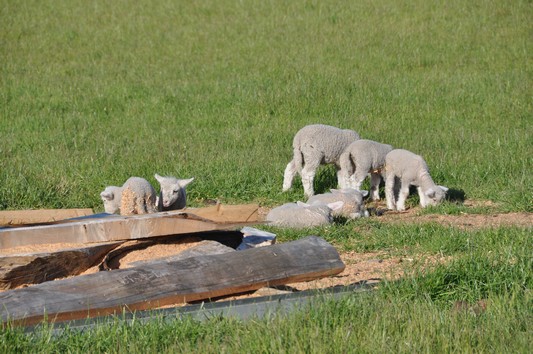
Outside the fence is another source of cheap home produce. A ready supply of abandoned lambs for free which would otherwise be dispatched. This year there are 15 running around the paddock. Some will be fattened up and sold on, a few will fill the freezers.


Aren’t they cute. From the left we have Chops, Shanks, Rump…. you get the picture.

RR’s New Boots

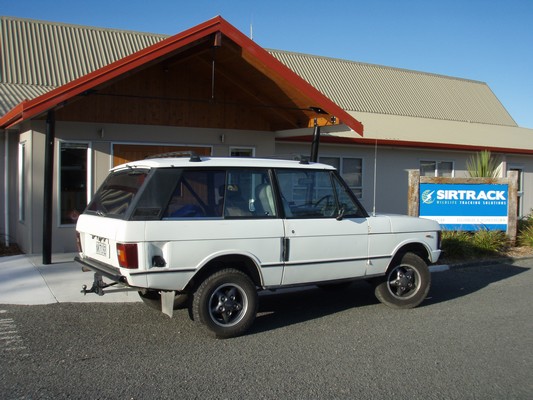
I never did post a picture of the Range Rover with the new suspension, wheels and tyres, so here it is outside work the other weekend when I dropped in to grab something from my desk. It certainly sits higher than the 27-odd year old saggy springs that were on there and may sit higher than standard, but the stronger springs and stiffer damping transform the handling. Might still fit the sway bars (anti-roll bars) as it still rolls, just way, way less than standard.

OLYMPUS DIGITAL CAMERA

Newly shod old girl. Note the typical Hawkes Bay sky, I doubt you would see a cloud anywhere.

The 235 section tyres give great grip for road use and fill out the wheel arches looking pretty sharp. The fronts rub slightly on the radius arms when reversing on full lock – no big deal. Not sure how they will fare with off-road articulation? May find out one day…

Seafield Road Motorcycle Hillclimb

My good friend Steve TXT’d me about a hill climb, or sprint, whilst I was in Washington DC at a workshop in mid-March. I’ve been to hill climbs at Te Onepu and Salisbury Rd a few times to watch a variety of cars give it a go. However, I missed the point of Steves TXT when I was in DC. On Saturday past I got a TXT from Steve about another hill climb. I called him that evening to discover that he and a group of local bikers had arranged for the road closure at Te Onepu and now at Seafield Road to allow bikers to legally thrash up the road as fast as they dare.

The road was closed from 0900 until 1630. In that time they hoped to get as many runs as the time, number of riders and any incidents allowed. On the day there were 35 bikes and they should manage maybe 6 or 7 runs through the day for the princely sum of NZ$40 (GBP15). If I had the DRZ ready with the supermoto wheels I would have given it a go. But given the fact that I had way less than 24 hrs notice and the fact that I’m a bit rusty having not ridden much over the last month or so, I wasn’t prepared to risk it on the Speed Triple which could bite back much harder than the DRZ. I’m definitely up for it next time.

In the meantime, some photos from the day.


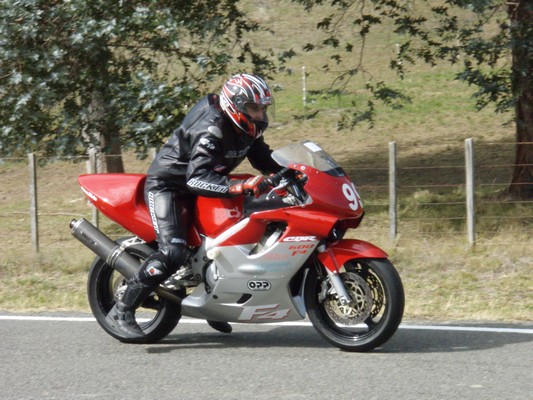
Steve launches the CBR off the line and keeps the front wheel on the floor


Haven’t seen one of these for years. Well used, but smelled and sounded the same!


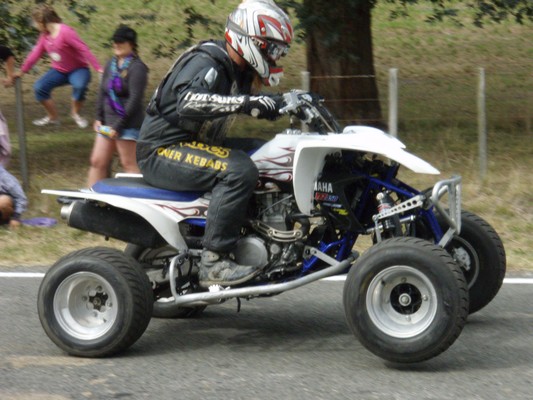
Familiar sight of the day – big thumper hoists the front off the line…


Not sure if the full moon was out….


… but more sane than this in my book.


Thankfully the owner/rider didn’t attempt to run this up the hill. With a 350 c.i. Chev motor in there it is extremely long, wide and heavy. Must handle like a pig, but sounded pretty good.

Old Man Emu

My 1981 ‘Classic’ range rover, three door finally failed a WOF (warrant of fitness) because of worn tyres. I’d been preparing for this and had lined up some 235 section tyres to replace the 205s. At the same time I knew I had to replace the shock absorbers as I could feel the front wheels pattering over bumps which means poor handling, reduced braking efficiency and excessive tyre wear. One of the rear shocks had eaten its lower rubber mounting bushes too. After some research it appeared that the best solution was a complete set of springs and shock absorbers from OME, or ‘Old Man Emu’, supplied by one of the main 4WD suppliers ARB. The four springs and shocks, plus the steering damper, are tuned for the vehicle. Many reviews I read suggested that this choice transformed the handling on and off road and removed the temptation to either remove the rear ride height strut or add anti-roll, or sway bars.

It cost me around NZ$1500 or about GBP600 for the full set, but it has indeed transformed the handling. It would have been interesting to compare against new original suspension since mine was 28 years old. However, I’m happy with new setup.

Now I’ve had a heater bypass hose blow. Old vehicles – love ’em!!

The 158 dollar kebab

The tyres on the range rover were pretty thin when I bought it, so no surprise that it failed its WOF (Warrant Of Fitness – NZ version of the MOT, but every six months rather than annual). It was Saturday morning and I was in Napier, so I went straight to ‘Landy Heaven’ to see what he had in the way of wheels and possibly tyres. I knew I wanted to go up to 225, or preferably 235 section which is the maximum possible without bodywork mods and/or reducing the steering lock. I got a set of 4 gray alloys from a later series-one Disco for the equivalent of GBP200 including wheel nuts. Early the next week I spent a lunchtime tripping around tyre joints looking for a deal. I eventually got from over $300 per tyre down to $255. On my way back to the office I picked up a kebab for $8 (not your greasy doner, but a healthy and tasty chicken one). Sadly I didn’t quite ‘stop’ at a stop sign and was issued a $150 fine. I didn’t sail through the junction, but slowed to a point where I could stop if necessary. There were no cars in sight, but the rules are rules, especially when the local council can make some quick bucks. I have no idea why that junction has a stop sign when many other similar ones don’t, but the bastards have been skinning people wherever they can recently. I pointed out the the fact that the police in the UK had given up such obviously cynical revenue earning as they had lost the respect of the public. They were seen as tax men rather than solving real crimes. The officer agreed, but it still cost me $150 for almost, but not quite stopping. So, $158 for a kebab – it was tasty, but not that tasty!!