Olympus µ770SW

After my trip to the Auckland Islands I realised that I had taken very few photos because it was wet weather and the ground was saturated, so my camera stayed in its bag in my rucksack most of the time. It was a conscious effort to get the camera out and given my hands on role I rarely had the chance. Most of all, I didn’t have those people doing things photo’s. I need a small camera that could handle some rough treatment and getting a bit wet.

As it happens, I’m heading off to Vanuatu in a few weeks for a holiday on a tiny resort island in a marine reserve, Hideaway Island. Waterside bungalow, snorkeling, sailing, kayaking and scuba diving if I feel so inclined. Should be good. A camera like this would be great for the trip.

I did a bit of searching on the web for weatherproof, or splashproof cameras and came across the Olympus µ770SW. ‘S’ for shockproof and ‘W’ for waterproof. Not only did it meet my requirements, but beat them by a country mile by being waterproof to 10m. Perfect for my upcoming holiday to capture all those cool fish while I’m snorkeling and I can take it on sailing boats and kayaks with no worries.

Only problem, price! List price in NZ was NZ$700. Not outrageous, but more than I had in mind. I looked at second hand ones on Trade-Me (NZ’s answer to eBay), a couple, but too expensive. Google came up with a great price at NZ$480’ish, but it would be a grey import with a limited supplier warranty of three months duration, not the factory twelve months. However, it was so cheap that I went for it, but their website was broken! Fate. A couple of days later I checked the Dick Smith (NZ geeky electronic store, like Maplin in the UK) website to see if I could get a second rechargeable lithium battery. Amazingly they had just announced a special price of NZ$160 discount for the camera plus a 2GB xD card. Given the internal memory in the camera is virtually useless, you need a memory card and a genuine Olympus 2GB xD card is way more than the price difference from my failed Google buy. And, for another NZ$80 I got a pack containing a 256MB xD card, a spare battery and a bag. All this for less than the list price for just the camera a week before, very cool!
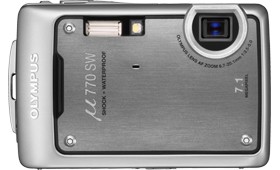
Olympus µ770SW

I’ve had the camera for a couple of weeks now. I haven’t got it wet yet, but love it so far. It has a macro and super macro mode, but better still it has a white LED to illuminate the object. I’ve used this a number of times at work in the last two weeks as it is so easy. Great for documentation, so easy. Beats trying to arrange suitable lighting and the super macro mode is great for real close up pics, such as electronic circuit board faults.

I’m really happy with my new buy. It’s small enough to fit in most pockets, tough and waterproof. It has some cool features, including an automatic lens cover, so no fluff or smudges whilst in your pocket. Oh, and its 7.1 megapixel.

If you need a pocket camera which is water and shock proof, even just in case, and is well designed and easy to use, I’d consider the Olympus (mju) µ770SW, especially if you can get a great deal like I stumbled on.
A Big Mountain – Kaweka

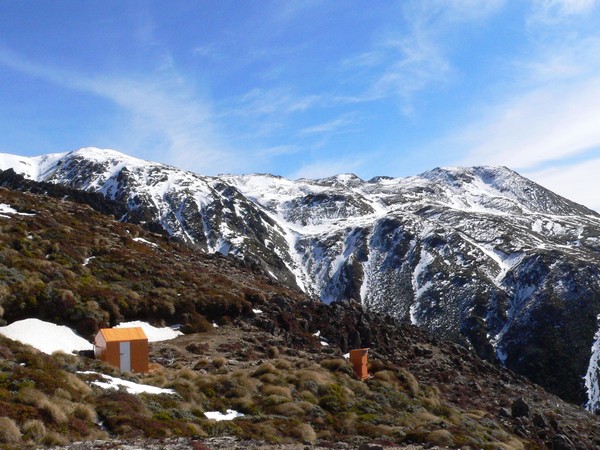
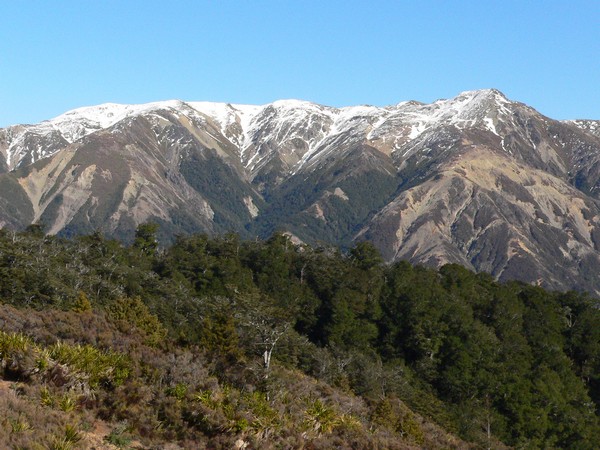
On Sunday past I headed off reasonably early to the foot of the Kaweka Range. When I rose the sun was just rising and there was a pretty hard frost outside, -2 or so, as hard as it gets in coastal Hawkes Bay. After chucking a few things in a bag, I headed a couple of hours inland. The sun fully up revealed a cloudless sky with the usual warming sun and little or no breeze. I stopped on the way to the carpark at a viewpoint and took this pic of the Kaweka Ridge.

Kaweka Ridge

I got to the carpark and put on my boots and looked at the map. The carpark is around 900m and the top of Kaweka J (junior I think, but turned out to be higher than North Kaweka by about 20m) is about 1725m, no easy stroll. The weather forecast was fine with any wind dropping away and bright sunny conditions. What the hell, lets go for it! I set off to see how far up Kaweka J and possibly North Kaweka I could go.

The first bit was an easy climb, but after a k’ or so I realised I was on the wrong path due to the signage being a bit confusing. I was on the right ridge and had followed the right signs, but was on the harder of two spurs with the guide book not mentioning the easier spur by its name. Looking at the map and up the ridge I was on, I decided to continue. After a good old slog up about 400m with some scrambling over scree and a couple of craggy outcrops my spur joined the main spur. After a wee rest I pushed on up the next 150m or so up to the Dominie Bivouac.

North Kaweka beyond the Dominie Bivouac

Another rest and it was starting to get cold. I had been in shorts and teeshirt ’til then, only cold when occasionally exposed to the wind on the ridge. I was also well into the snow by now. The last big climb took me around the South side of the ridge (S. hemisphere, sun free side) and I crossed a couple of wee snow fields. The clincher was one about 20-30m across. I couldn’t see what was below it (could have been a long drop and a real short stop) and there were no steps across it. Without walking sticks, crampons or an ice-axe – and alone and not having given anything other than a vague plan to my neighbours – I decided not to risk it and turned back. Annoying as I was only 100m or so in height and 1km distant from Kaweka J after slogging up about 700m. Mind you, my legs were like jelly when I got back to the carpark.

I had earlier seen signs to ‘Hot Springs’ and given my tired legs I decided to go and check them out and maybe have a bit of a soak. On reaching the main road, which quickly turned to gravel, it was a good half hour drive to the Mangatutu Hot Springs. Again, only two cars there. On the way down to the spring I passed a couple heading back up the track, but not another soul in sight. At the bottom of the path DOC have kindly built a wooden platform with a fibreglass pool to soak in. It looks out over the mighty Mohaka River – a very cool spot. With nobody around I took a risk and skinny-dipped in the pool. Very pleasant! After about half an hour I got out and sat in the warm sun and warm breeze until I was dry and could get dressed. I hadn’t planned coming here and hadn’t packed a towel or spare clothes. Back home in Scotland this place would have been mobbed, so it was awesome to have most of an hour of relaxation with no disturbance in amongst the ferns, native shrubs and the towering introduced gum trees.

Note to self – perhaps be less ambitious when you haven’t climbed a mountain for a year or two! Boy are my legs sore today!

New ve-hicle

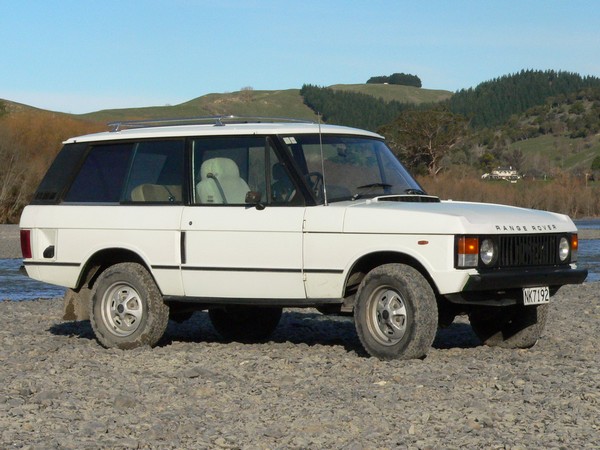
I have recently acquired a new (to me) vehicle. It’s a 1981 Range Rover in remarkably good condition. In Scotland it would be dead from salt corrosion. Apart from light surface rust in places it’s solid.

1981 Range Rover

I bought it down in Nelson on the South Island. Having spoken to the owner a couple of times on the phone it was clear he was/is a bit of Range Rover nut and had spent most of what I paid for it in the preceding couple of years – with receipts. So, I took a punt on the understanding that if I found anything seriously expensive I could back out of the deal.

So, a few Saturdays ago, I took the early flight, 5 a.m. start, from Napier to Nelson. On airpoints, so didn’t hurt at all. The owner picked me up at the airport and I drove back to his house. It is in good nick as had been described and drove well. I believe the 165,000kms as the wear on the pedals is not severe. My only grouch would have been the tyres, but the owner had already dropped the price considerably after getting no interest (Nelson isn’t near anywhere and it’s on the South Island, inconvenient for most people) and I didn’t have the heart to haggle when I was getting a bargain. So the deal was done and, after picking up a box of spares and a Haynes manual, I set off for Picton and the ferry, an hour and half’s drive or so.

Approaching Havelock, the original – not Havelock North where I live, the oil pressure went off the gauge. Not low as you might expect with an old vehicle, but high pressure!? The engine was still pulling fine, the temperature fine, so I put it down to a faulty sensor and carried on. Since then it seems to have recovered – fingers crossed!

So, across on the ferry. Food approximate to Cal-Mac standard which is disappointing, must be something about ferries.

Headed straight up the road from Welly with a brief stop in Woodville for fuel and a sandwich. I got home just in time to watch the All Black beat the Crim’s.

A 16 hour adventure and a new vehicle. Average fuel consumption of a little better than 15mpg (not too painful when fuel costs less than half the UK price).

Auckland Island Pigs

Sirtrack supplied new technology GPS/Argos collar and harness mount transmitters to DOC (Department of Conservation, New Zealand) for tracking feral pigs on the Auckland Islands. Unfortunately these failed to operate correctly despite the fact that almost identical technology is still functioning fine on other species elsewhere. I was nominated to travel down to the Auckland Islands with DOC to ensure that the replacement transmitters were correctly configured and tested before deployment, assist in the catching and attachment and to help recover as many as possible of the malfunctioning units.

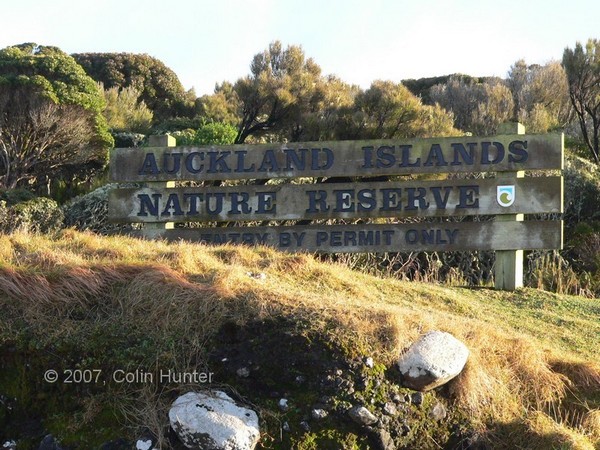
aucklandissign.jpg

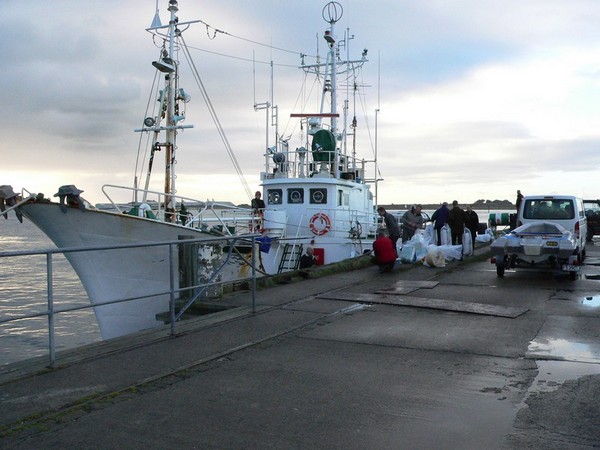
We sailed from Bluff on the Clan McLeod …

clanmcleod01.jpg

… a thirty hour passage. We arrived just after dark with no idea if the helicopter had managed to fly down that day or not.

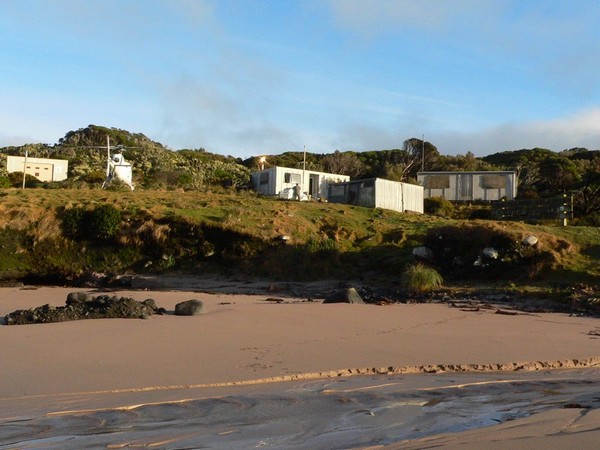
As it happened the helicopter had arrived, so it lifted our gear and the drums of helicopter fuel to our land base on Enderby Island.

enderbyislandbase.jpg

Our accommodation was the sea lion research station, normally only used between November and February – very comfortable.
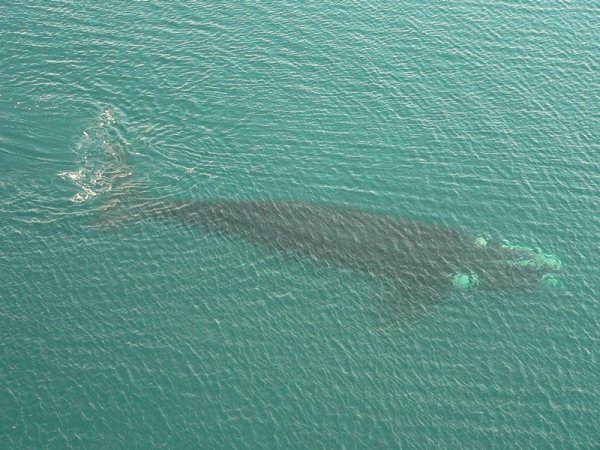
There were possibly as many as a hundred southern right whales breeding in Port Ross, the sheltered inlet at the Northeast corner of the archipelago.

rightwhale.jpg

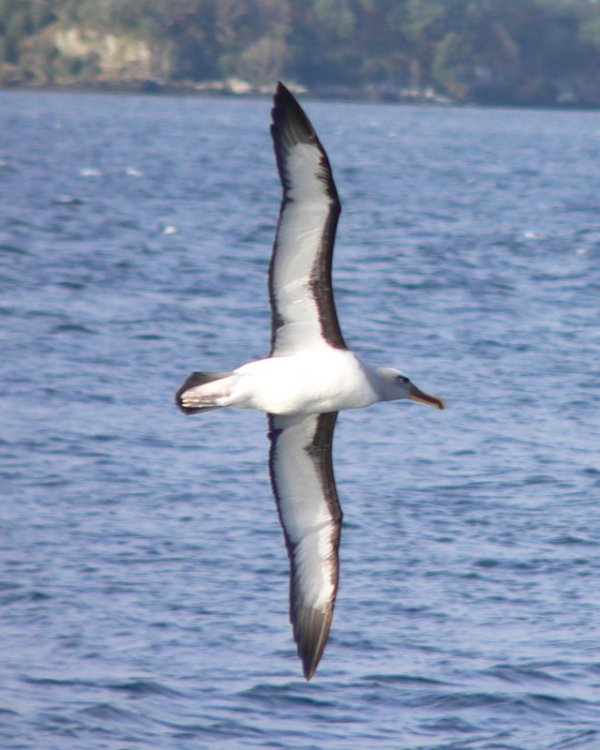
Lots of shy mollymauks flying around. Big birds! Very majestic.

shyalbatross.jpg

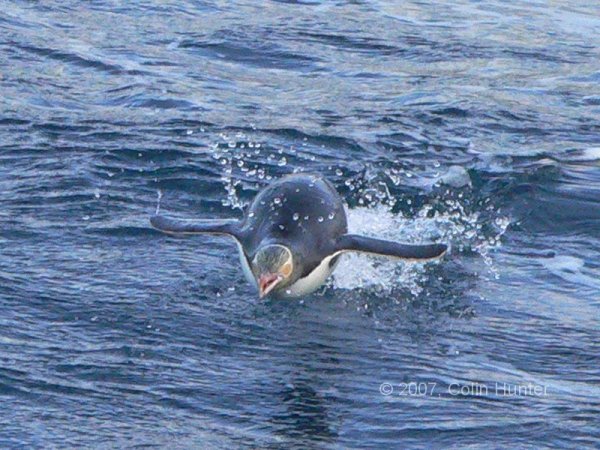
One of the largest breeding colonies of yellow-eyed penguins is on Enderby Island with no cats or pigs to bother them. Here’s a picture of a penguin flying – sort of.

yelloweyed01.jpg

More to come…